
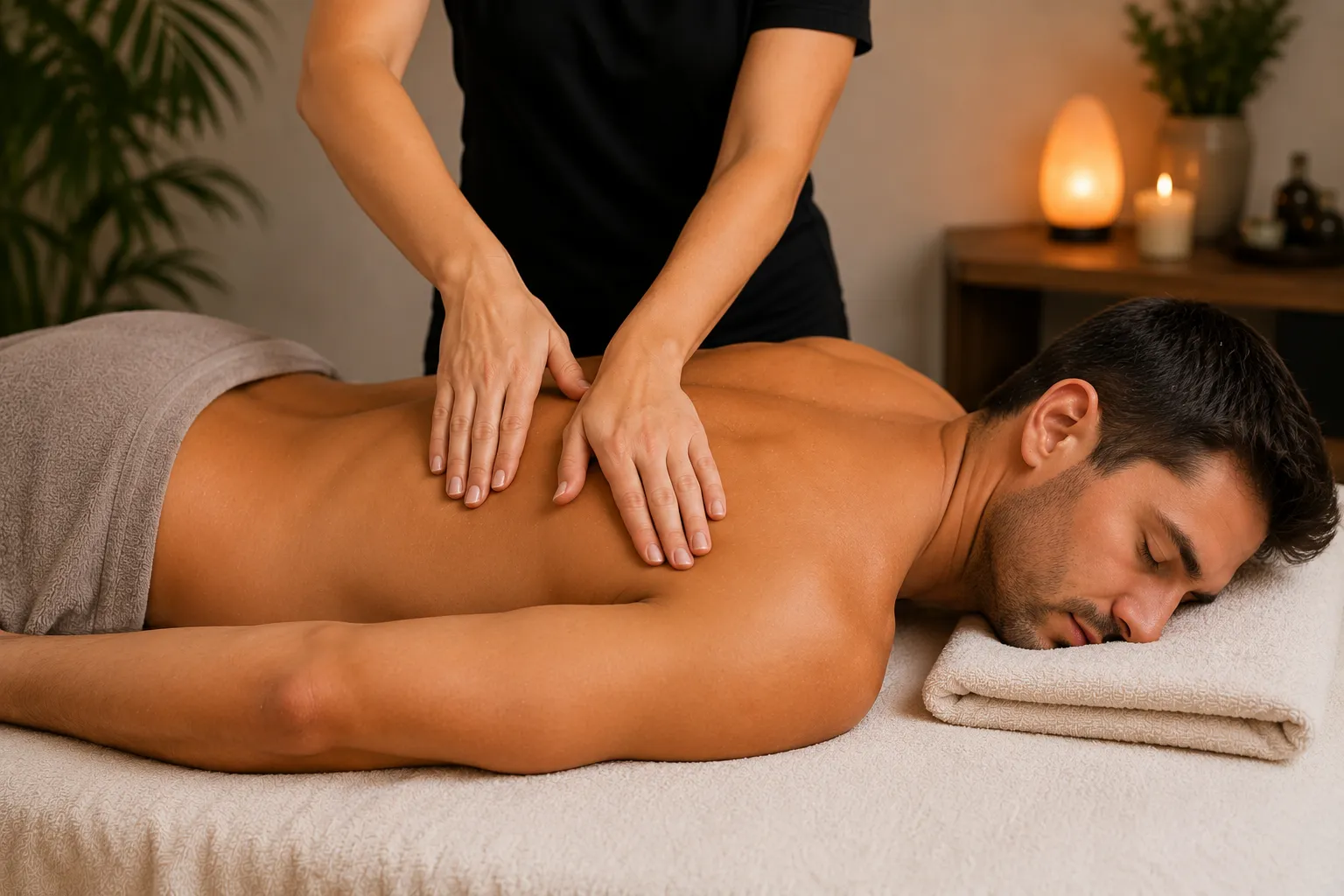
What remedial massage actually is
Remedial massage is a clinical approach, not a firmer version of relaxation massage. A session starts with assessment — what brought you in, where the pain or restriction is, how your body is moving, what's likely driving the issue. From there, the right techniques are selected and applied to address the actual cause, not just the symptoms. The goal isn't just an hour of feeling good; it's measurable improvement in pain, mobility and function that holds over time.
At Massage by Laura's Runaway Bay studio, remedial is the most-booked service — and the only one that's claimable on private health extras cover. Every session is delivered by Laura, an ATMS-registered remedial massage therapist with a Diploma of Remedial Massage from Evolve College, Brisbane, and 5 years of clinical experience.
The clinical approach: assessment, treatment, reassessment
Three things make remedial different from any other treatment on the menu:
1. Assessment first
Before any massage starts, the session begins with a clinical intake — what's brought you in, when the issue started, what aggravates and eases it, your work and activity patterns, previous injuries, current medications, and what you'd like the outcome to be. Brief range-of-motion and postural assessment if appropriate. This isn't a long interrogation — usually 5-10 minutes — but it shapes everything that follows.
2. Targeted, technique-led treatment
The massage itself is built around what the assessment revealed. Maybe it's firm, deep-pressure work on the upper traps and levator scapulae for tension headaches. Maybe it's myofascial release through the glutes and piriformis for sciatic-pattern pain. Maybe it's trigger point therapy through the quadratus lumborum for chronic low back pain. Different problems need different tools — and the right technique applied to the right area is what makes remedial effective.
3. Reassessment and self-care
Before the session ends, the relevant area is reassessed — has the range of motion improved? Has the tenderness shifted? You'll usually leave with one or two specific things to do between sessions: a stretch, a postural cue, a movement modification, sometimes a rolling/release suggestion. The goal is for the work to hold — not just feel good in the room.
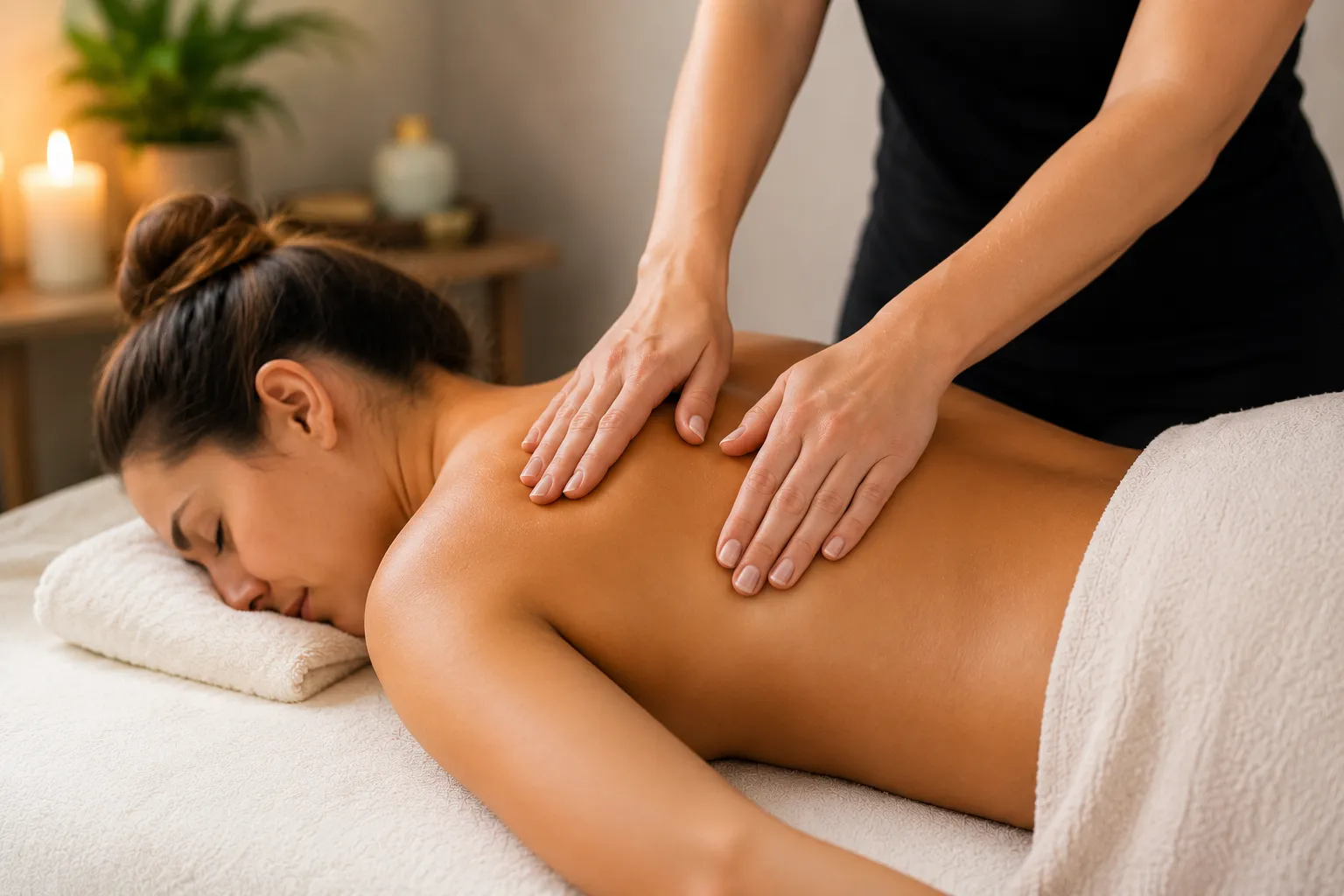
What remedial massage is commonly used for
These are the most common reasons clients book remedial at the Runaway Bay studio — each links to its dedicated condition page if you want more detail:
Lower back pain
One of the most common presentations. Tight quadratus lumborum, erector spinae and gluteal muscles often refer pain into the lower back. Remedial work addresses these directly — combined with movement and postural advice — and tends to produce meaningful improvement within 2-3 sessions for most non-structural cases.
Neck and shoulder tension
The single most common reason clients book remedial — chronic tightness through the upper traps, levator scapulae, rhomboids and along the cervical spine. Usually driven by desk work, screen time, stress, and how we carry our heads in modern life. Highly responsive to remedial treatment.
Tension headaches and migraines
Tension-driven headaches often originate in the muscles of the neck, shoulders and base of the skull. Remedial work releasing these muscles — combined with postural correction — can significantly reduce frequency and intensity. For diagnosed migraine sufferers, remedial can be a useful adjunct to medical management, not a replacement for it.
Sciatic-pattern pain
When sciatic-pattern pain is caused by tight glutes, piriformis or deep hip rotators (as opposed to disc compression), remedial massage can be highly effective. The first session includes assessment to work out whether the issue is muscular or potentially something that needs medical investigation first.
Sports injury and recovery
Whether you train at a local gym, run the Broadwater, lift, play sport on weekends, or work a physically demanding job, remedial supports recovery between training sessions and addresses the inevitable accumulated tightness that comes with sustained activity. For acute injuries, please seek medical assessment first — remedial works best alongside (not instead of) appropriate medical care.
Muscle knots and trigger points
Those palpable, tight, painful bands in the muscle that don't release on their own. Trigger point therapy — sustained pressure on these specific points — is one of the core remedial techniques and is particularly effective for chronic patterns that haven't responded to general massage.
Desk-job pain and postural strain
The classic modern presentation: tight upper traps, forward-rolled shoulders, stiff thoracic spine, tight hip flexors, that aching band between the shoulder blades. Remedial massage addresses the immediate tightness and — combined with simple movement advice — can make a substantial day-to-day difference.
Chronic tension that won't resolve
Sometimes tension just settles in and doesn't shift, no matter how much rest or stretching you do. Remedial work — with proper assessment of what's actually maintaining the pattern — is often what finally breaks the cycle.
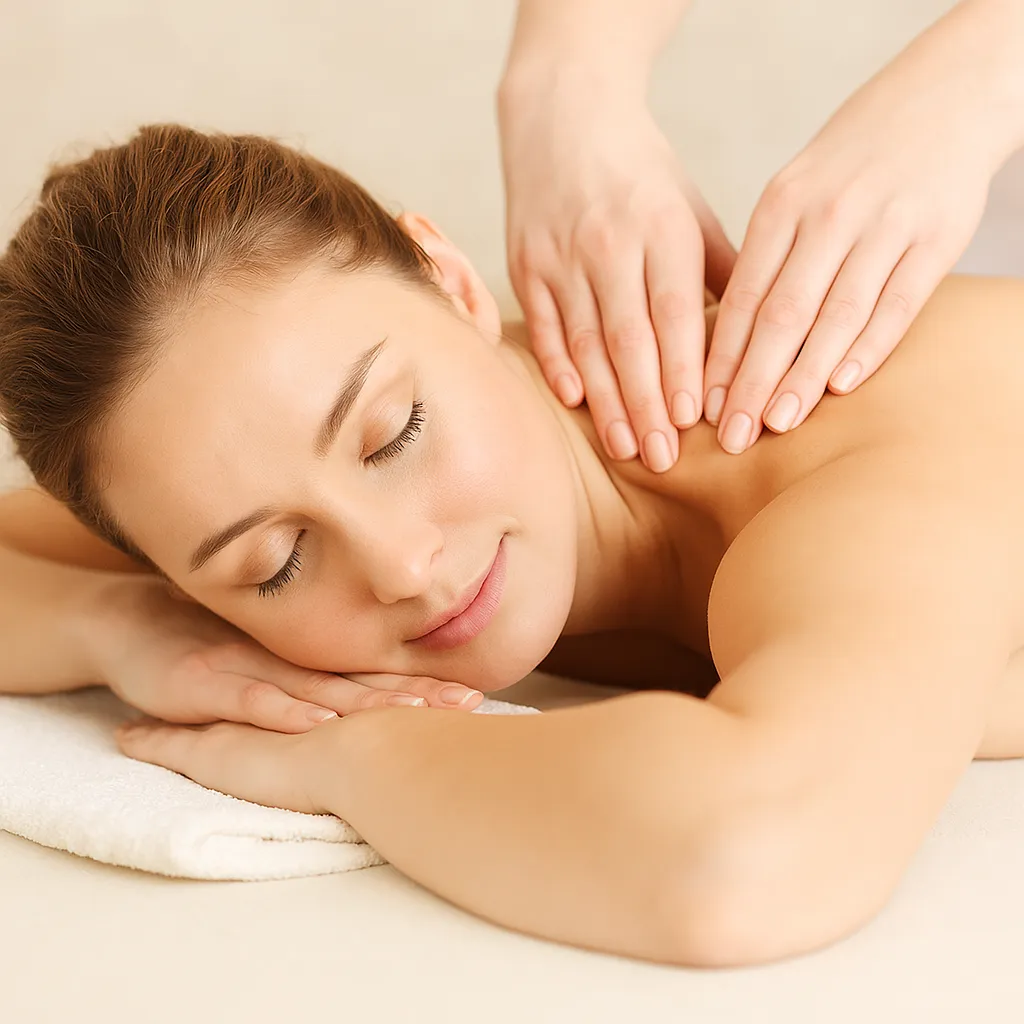
Techniques used in remedial massage
Remedial isn't a single technique — it's a clinical approach that draws on whichever techniques are appropriate for your presentation. A typical session might include several of these:
- Firm, deep-pressure work — slow, sustained pressure into deeper muscle layers to release chronic tension
- Trigger point therapy — sustained direct pressure on specific tight points within muscles, often where pain refers from
- Myofascial release — slow, sustained pressure through the fascia (connective tissue) to release restrictions in the tissue itself
- Cross-fibre and circular friction — targeted work across muscle fibres to break down adhesions and improve tissue mobility
- Stretching and mobility work — passive and PNF stretching to improve range of motion alongside the soft-tissue work
- Postural and movement education — specific cues and exercises to help the work hold between sessions
Where appropriate, sessions can also incorporate myofascial cupping (Laura holds a separate post-graduate certification in this), depending on what your body is asking for.
Health fund rebates — how it works
Remedial massage is claimable on most major Australian private health extras cover, including:
- BUPA
- Medibank
- HCF
- NIB
- AHM
- Australian Unity
- Defence Health
- HBF (in WA)
- Most other major funds — please check your specific policy
The eligibility comes from Laura's registration with the Australian Traditional Medicine Society (ATMS) — one of Australia's main professional associations for remedial massage therapists. Your rebate depends on your level of cover, your annual limits, and the specific provider. Typical rebates are in the range of A$25-A$70 per session.
How the claim works
It's straightforward. After the session, Laura provides an itemised invoice with the ATMS provider number — you can:
- Claim through your fund's app on the spot — most major funds (BUPA, Medibank, HCF, NIB etc) allow you to upload the invoice and receive the rebate directly to your account, often within minutes
- Claim later online via your fund's member portal
- Submit by mail or in branch if you prefer
Just mention your health fund when booking so the invoice is prepared correctly. For CTP, workers' compensation or insurance claims, you may need a GP or specialist referral — please mention this when booking.
Remedial vs other treatments
Remedial vs relaxation massage
Relaxation is the classic full-body wellness massage — it doesn't require any specific issue to address and isn't claimable on health fund. Remedial is for clients with something specific to work on, and the health fund rebate often makes the out-of-pocket cost similar after claim. Pick relaxation if you want general unwinding; pick remedial if there's actually a problem to solve.
Remedial vs lymphatic drainage (MLD)
Different bodies, different needs. Remedial works with muscle and fascia using firm targeted pressure. MLD works with the lymphatic system using very light, rhythmic strokes — primarily for post-surgical recovery, lymphoedema management or significant fluid retention. Both are claimable on health fund (Laura is qualified to deliver both), but you'd book each for different reasons.
Remedial vs cupping
Cupping is a complementary technique to remedial, not a replacement. It uses suction to lift tissue from above, where remedial uses pressure to compress from outside in. Many clients incorporate cupping into a remedial session for stubborn fascial restriction — Laura holds a post-graduate certification specifically in Myofascial Cupping. Standalone cupping isn't claimable on health fund; a remedial session that includes cupping work is.
What to expect during your first appointment
Plan a few extra minutes for your first session — first appointments include a more thorough intake conversation than follow-ups. Bring your health fund details if you'd like to claim. If you're using a CTP/workers comp/insurance claim, bring any referral and claim documentation.
Your session will follow this rough structure:
- Intake conversation (5-10 minutes) — what's brought you in, your history, your goals
- Brief assessment — postural check, range of motion through the relevant area, identification of where to focus
- Targeted treatment — the bulk of the session, using whichever techniques are most appropriate
- Reassessment — checking that the work has produced measurable change
- Self-care advice — one or two specific things to do between sessions to help the work hold
Pressure is always adjusted to your comfort. Some areas of chronic tension may feel tender during work — that's expected, and most clients describe it as a "good hurt" that releases as the muscle softens. It should never be sharp or unbearable; speak up if anything crosses that line.
After the session, mild soreness for 24-48 hours is common, similar to the feeling after a good workout. Drink plenty of water, move gently, and the area usually feels noticeably better within a couple of days.
Honest scope: what remedial massage is and isn't
Remedial massage is: assessment-based clinical treatment of muscle, fascia and soft tissue, focused on pain relief, injury recovery, mobility improvement and postural support. Backed by recognised qualifications and professional registration. Effective for most musculoskeletal complaints involving muscle tightness, chronic tension or postural patterns.
Remedial massage isn't: a substitute for medical diagnosis or care. If you have acute injury, severe or sudden pain, suspected fracture, nerve symptoms (numbness, weakness, loss of function), inflammatory conditions you haven't had diagnosed, or any symptom that's rapidly worsening — please see your GP, physiotherapist or specialist first. Remedial often works alongside medical care, but it doesn't replace it.
If you're unsure whether your situation suits remedial, send Laura a message describing it briefly and she'll let you know honestly whether to book, or whether you should see a GP or physio first.
This treatment can help with
Remedial massage is the right starting point for most musculoskeletal issues. Specific patterns it commonly addresses:
Frequently asked questions
What's the difference between remedial massage and a regular massage?
Is remedial massage claimable on private health funds?
How much can I claim back from my health fund?
Is Laura qualified to deliver remedial massage?
Will remedial massage hurt?
What conditions does remedial massage help with?
How often should I book remedial massage?
Should I book 30, 60 or 90 minutes?
Does remedial massage include firm, deep-pressure work?
Do I need a referral to book remedial massage?
How much does remedial massage cost?
Can I book online?
Service areas
Massage by Laura is conveniently located in Runaway Bay and serves clients across the Gold Coast, including:
Book your remedial massage today
Ready to feel better? Booking is simple — online 24/7 via Fresha, or by phone on 0493 428 064. Health fund rebates available on eligible remedial massage treatments. If you're not sure whether this is the right treatment for you, send Laura a message first — she'll happily talk it through.