
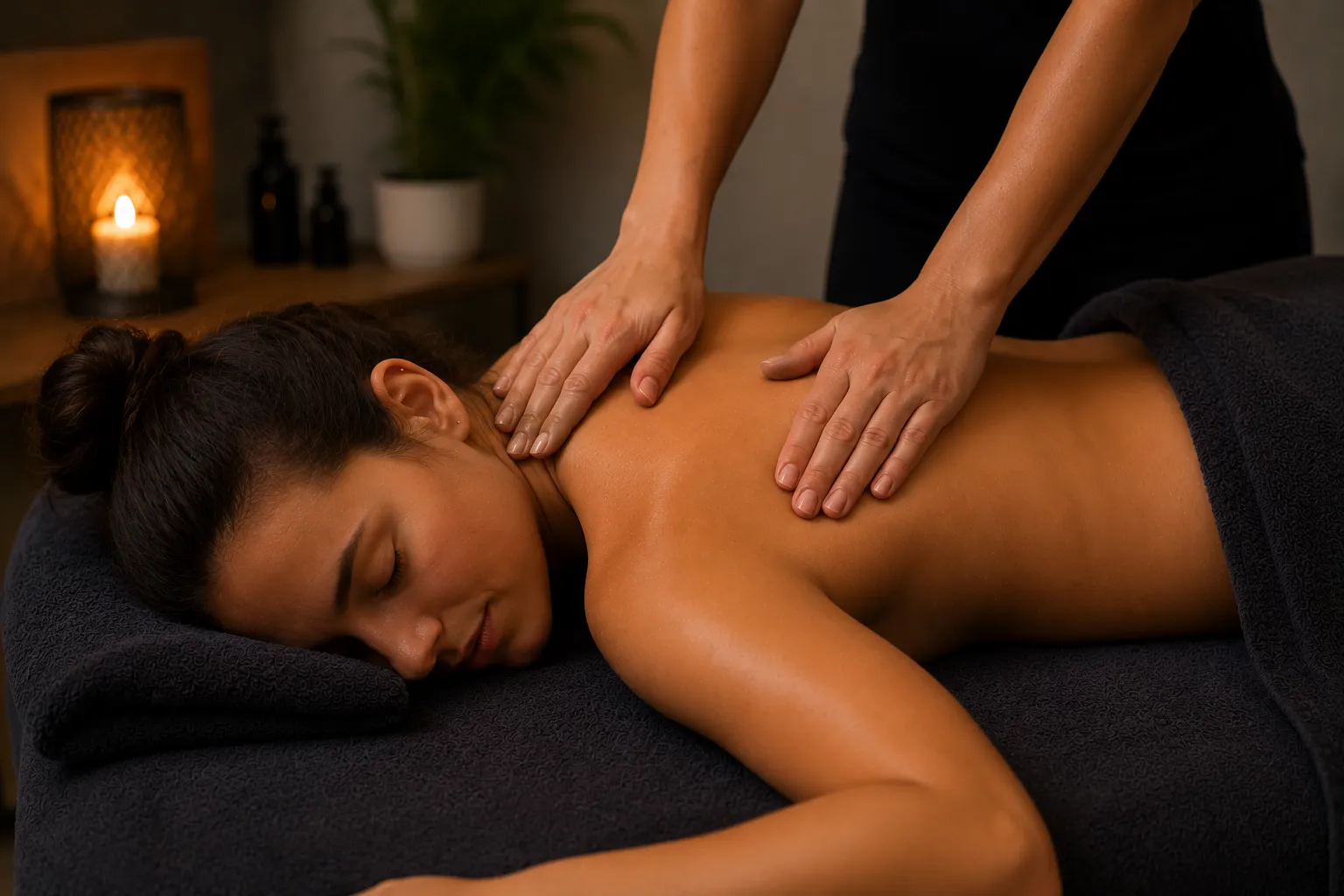
What is a de-stress massage?
A de-stress massage is a calm, full-body treatment built around one job: helping your nervous system stop bracing. Where remedial work targets the muscle itself, a de-stress session targets the state you're in — the constant low hum of being wired, the can't-switch-off feeling, the day-after-day cumulative load of work, family, screens and the news.
The pace is slower. The pressure is gentle and even. The lighting is soft, the music is unobtrusive, and the room temperature is set so you don't have to think about anything except being there. Aromatherapy is available as an optional add-on if you'd like the additional sensory layer. At Massage by Laura's Runaway Bay studio, every de-stress session is delivered by Laura — an ATMS-registered remedial therapist with 5 years of clinical experience — so even though the goal is relaxation, the work itself is informed by proper anatomical understanding of how stress sits in the body.
Why people book de-stress massage on the Gold Coast
Modern life keeps a lot of bodies stuck in a low-grade stress response. The nervous system, evolved to handle short bursts of danger and then settle, instead stays mildly switched-on for hours, days, weeks at a time. Over time, that shows up as:
- Restless sleep — falling asleep is hard, or you wake at 3 a.m.
- A constant background tightness in the shoulders, jaw or chest
- Mental fatigue that doesn't lift on weekends
- Tension headaches that creep in by mid-afternoon
- Feeling "wired but tired" — too exhausted to function, too revved to relax
- Short fuse, less patience, irritability over small things
These aren't medical conditions in themselves — they're symptoms of a nervous system that hasn't had a chance to fully reset. A de-stress massage is a deliberate pause from that pattern: an hour or 90 minutes where the only thing required of you is to lie still and let go.
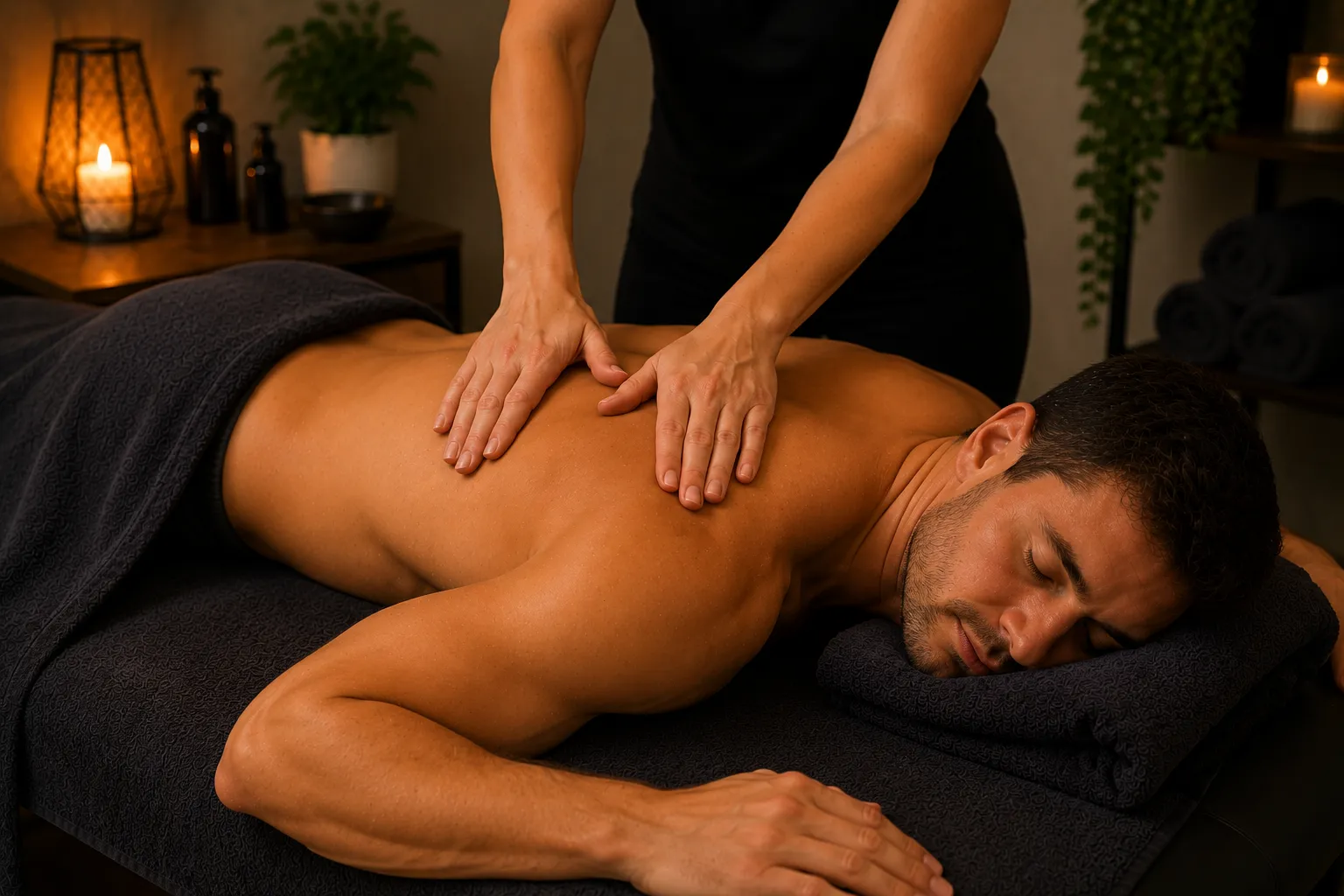
Benefits of a de-stress massage
The benefits are real, but they're worth framing honestly. A single de-stress session won't fix chronic burnout or untreated anxiety — those need a wider strategy. What a session can reliably do:
- Shift you out of the stress response into the body's rest-and-restore state for the duration of the session and afterwards
- Reduce that "wired" feeling — the buzzing background tension in shoulders, neck and jaw
- Improve sleep on the night of the session — most clients report falling asleep faster and sleeping more deeply
- Reset emotional baseline — perspective often returns when the body finally drops down a gear
- Soften tension headaches by releasing the chronic shoulder and neck tightness that drives them
- Give you uninterrupted time — no phone, no decisions, no demands on you
Many clients build de-stress massage into their lives as monthly maintenance — a deliberate scheduled pause to keep stress from compounding. It's not a luxury when you treat it that way; it's preventative self-care.
What a de-stress session feels like
The session begins with a short, low-key conversation about how you're feeling, what kind of week you've had, and anything specific to flag — sensitivities, areas you'd like extra time on, scents you do or don't want if you've chosen the aromatherapy add-on.
The work itself is slower and more flowing than a therapeutic massage. Long, even strokes across the back, shoulders, arms and legs. Extended time on the neck, scalp and face — the places where stress quietly accumulates and where release tends to land hardest. The pressure stays in a calm middle range — not so light it tickles, not so deep it stimulates. The goal throughout is to give your body unambiguous signals that it's safe to fully let go.
Some clients drift in and out of sleep. Some sigh deeply about ten minutes in and stay quiet for the rest. A few cry — usually quietly, sometimes unexpectedly. All of that is completely normal. The room is private, you won't be rushed, and there's no "right" way to do a de-stress massage.
De-stress vs other massage treatments
De-stress vs relaxation massage
Both prioritise calm over deep muscular work, and either is a good choice if you want a softer, restorative session. The de-stress version leans further into the sensory experience — slower pacing, more time on the head, neck and scalp where stress sits, and the option of aromatherapy. Relaxation massage is the everyday wind-down; de-stress is for when stress is the specific reason you're booking.
De-stress vs remedial massage
Different goals. Remedial massage works diagnostically — what's driving this pain, what's the underlying pattern, how do we address it? It's the right choice for specific injuries, recurring pain or postural issues, and it's claimable on most private health extras. De-stress doesn't ask any of those questions — it just creates the conditions for your nervous system to settle. If you have both physical and emotional load, many clients alternate between the two.
De-stress vs hot stone massage
Hot stone uses warmth as the main relaxation tool — heated stones placed on and used to massage the body. De-stress uses pacing and sensory environment instead. Both achieve a calm, switched-off state by different routes — choose hot stone if warmth particularly appeals, choose de-stress if you want a flowing, full-body experience with the aromatherapy option.
Adding aromatherapy
Aromatherapy is available as an optional A$5 add-on. When chosen, essential oils are blended into the massage oil so the scent stays subtle rather than overwhelming. The right blend can deepen the relaxation effect — particular oils have well-known calming properties — but the session works well without it too. If you have allergies, sensitivities, or simply don't enjoy strong fragrance, mention it when booking or at the start of the session and the treatment will be adapted.
Who de-stress massage suits (and who it might not)
De-stress is a good fit if you're carrying ongoing stress or burnout, struggling with the "wired but tired" feeling, sleeping poorly from a busy mind, in need of an uninterrupted hour where nothing is asked of you, or simply want a softer, more sensory experience than a clinical massage.
De-stress may not be the right starting point if you have a specific muscular injury or pain you want addressed (book remedial massage instead — it's also claimable on private health extras), you want firmer, targeted pressure, or you have an acute mental-health crisis that needs professional support — massage can be part of a wider strategy, but it isn't a substitute for clinical care.
This treatment can help with
De-stress massage is most useful for clients dealing with these patterns:
What to expect during your appointment
Arrive a few minutes early if you can — even five quiet minutes in the studio before the session begins is helpful. There's a short conversation at the start: how you're feeling, anything to flag, whether you'd like the aromatherapy option, any areas you'd like extra attention on. After that, Laura steps out briefly while you settle on the table.
The session itself is unhurried. The lights are low, the music is soft, and the focus is on you having a complete, uninterrupted pause from everything outside the room. Most clients leave feeling noticeably lighter, calmer and less mentally cluttered — and many find the effect carries through the rest of the day and into a better night's sleep.
Frequently asked questions
What is a de-stress massage and how is it different from a regular massage?
Is de-stress massage good for anxiety?
Will it help me sleep better?
Should I book 60 minutes or 90?
Is aromatherapy included?
How is this different from a relaxation massage?
Will Laura talk during the session?
Is de-stress massage claimable on health funds?
What if I cry during the session?
How much does de-stress massage cost?
Can I book online?
Service areas
Massage by Laura is conveniently located in Runaway Bay and serves clients across the Gold Coast, including:
Book your de-stress massage today
Ready to feel better? Booking is simple — online 24/7 via Fresha, or by phone on 0493 428 064. If you're not sure whether this is the right treatment for you, send Laura a message first — she'll happily talk it through.