
Massage for neck and shoulder pain on the Gold Coast
Neck and shoulder pain is one of the most common reasons people book a remedial massage at our Runaway Bay studio — and it is easy to see why. Phones, laptops, driving and desk work all pull the head forward and round the shoulders for hours at a time. The muscles that hold your head up simply never get to switch off, and over weeks and months they tighten, knot and start to ache.
The reassuring part is that the great majority of neck and shoulder pain is muscular. It is the upper trapezius, levator scapulae, the muscles along the base of the skull and between the shoulder blades doing too much for too long. That is exactly the pattern targeted, hands-on massage is good at releasing — not by masking it for an afternoon, but by working out the tension and giving you practical ways to keep it away.
What causes neck and shoulder pain?
Most neck and shoulder pain builds up gradually rather than arriving from a single injury. The usual drivers we see in the studio include:
- Screen and desk posture — the classic "tech neck": head forward, shoulders rounded, upper back slumped. Our desk-job and posture pain page covers this in detail.
- Stress and shallow breathing — we literally carry stress in our shoulders, and a tense, guarded upper body becomes a habit. See stress and anxiety.
- Poor sleeping position — an unsupportive pillow or stomach sleeping leaves you stiff and sore on waking.
- Trigger points and knots — tight bands in the traps and around the shoulder blade refer pain up into the head and down the arm. See muscle knots and trigger points.
- Repetitive load — carrying kids, bags, tools or training with poor upper-body mechanics.
How massage helps neck and shoulder pain
Remedial techniques work directly on the muscles driving your pain. A focused session helps to:
- Release the upper trapezius, levator scapulae and the muscles along the base of the skull
- Break down trigger points that refer pain into the head, jaw and arm
- Free up the muscles between and around the shoulder blades
- Improve range of motion so turning your head feels easier
- Ease the muscular tension that drives many tension headaches
- Calm an upper body that has been stuck in a guarded, braced position
The link between neck tension and headaches
A large share of everyday headaches are cervicogenic — they begin in tight muscles at the neck and base of the skull rather than in the head itself. When the suboccipital muscles and upper traps stay tense, they refer a dull, band-like ache around the head and behind the eyes. Releasing that tension is often why people notice their headaches ease off after a neck and shoulder treatment. If headaches are a big part of your picture, our massage for headaches and migraines page is worth a read.
What a neck and shoulder treatment looks like
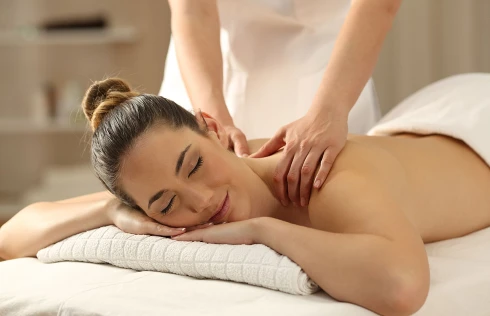
Every session begins with a short chat and assessment — how the pain started, what makes it worse, your work setup, sleep and stress levels, and how your neck is moving. From there Laura tailors the treatment: sustained pressure and trigger-point work through the traps and around the shoulder blades, careful work at the base of the skull, and mobilising the tight tissue so your neck moves more freely. Pressure is checked throughout; firm is fine, sharp is not. Most people leave able to turn their head more easily and feeling the load lift off their shoulders.
How many sessions will you need?
A recent bout of neck and shoulder tension often eases noticeably in one or two sessions. Long-standing, posture-driven tightness usually responds best to a short course of three to six treatments spaced a week or two apart, paired with a few simple changes to your desk, pillow and daily movement. Many clients then settle into a monthly maintenance massage to keep the tension from creeping back. There is no lock-in — Laura will give you an honest sense of what your neck is likely to need.
When to see your doctor first
Remedial massage is well suited to the muscular neck and shoulder pain that makes up most cases, but it is not the right first step for everything. Please see your GP or an appropriate health professional promptly, rather than booking a massage, if you have numbness, pins and needles or weakness travelling down the arm, neck pain following a significant accident or trauma, dizziness or visual changes, or pain that is severe, constant and unrelenting at night. If you are unsure, send Laura a message first and she will point you in the right direction. Where appropriate, massage also works well alongside care from your GP or physiotherapist.
Looking after your neck and shoulders between sessions
What you do between visits makes the relief last. Small, sustainable changes help most: raising your screen to eye level, taking regular movement breaks, being mindful of how you carry bags, and reviewing your pillow if you wake stiff. Laura will suggest a couple of specific things suited to your body and routine rather than a generic list.
Health fund rebates
Laura is an ATMS-registered remedial massage therapist, so most clients with private health extras that include remedial massage can claim a rebate. Just mention it when you book so your invoice is prepared correctly, and choose remedial massage rather than a relaxation treatment for both the clinical approach and health fund eligibility.
Book your neck and shoulder treatment in Runaway Bay
If a tight, aching neck and shoulders are wearing you down, targeted remedial massage is a sensible place to start. Booking is easy — online 24/7 via Fresha, or by phone on 0493 428 064. Our Runaway Bay studio serves clients across the Gold Coast. Not sure it is the right fit? Message Laura first and she will talk it through.