
Massage for desk-job and posture pain on the Gold Coast
Modern work is hard on the body in a quiet, cumulative way. Eight or more hours a day with the head forward, shoulders rounded and hips folded gradually reshapes how you sit and stand. The result is the familiar desk-worker pattern: a stiff, aching upper back, tight and tender shoulders, a sore neck, tight hips, and that nagging tension between the shoulder blades that no amount of shifting in your chair seems to fix.
The good news is that this is a soft-tissue pattern, and soft tissue responds to hands-on work. Regular remedial massage releases the muscles that have tightened and shortened from sitting, and pairs well with a few practical changes to your setup and habits to keep the tension from rebuilding.
The desk-worker posture pattern
Long hours at a screen tend to create a predictable chain of tightness:
- Forward head and "tech neck" — the head drifts forward, overloading the neck and base of the skull and often driving tension headaches.
- Rounded shoulders and tight chest — the shoulders roll in and the chest shortens, leaving the upper back stretched and weak.
- Mid-back stiffness — the thoracic spine stiffens from slumping.
- Tight hip flexors — hours of sitting shorten the front of the hips and switch off the glutes, feeding lower back pain.
- Wrist and forearm tension — from mouse and keyboard use.
How massage helps posture pain
Massage will not change your bone structure, but it directly addresses the muscular half of the problem — the tightness and imbalance that make sitting uncomfortable. A session helps to:
- Release the tight upper traps, neck and the muscles between the shoulder blades
- Open the tight chest and mobilise a stiff mid-back
- Ease shortened hip flexors that pull on the lower back
- Relieve wrist and forearm tension from typing and mouse work
- Reduce the everyday ache that makes it hard to concentrate
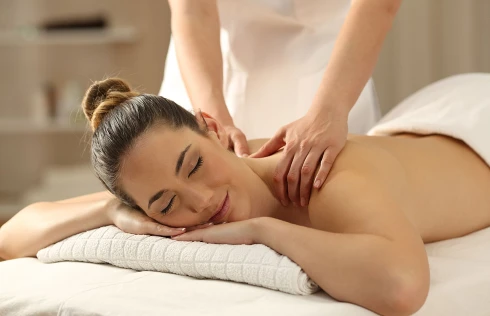
Why the pain keeps coming back
Desk pain is a load problem: it builds because the same posture is repeated day after day. Massage gives you real relief and better movement, but if the desk setup and habits stay the same, the tension slowly rebuilds. That is why the most effective approach pairs regular treatment with simple ergonomic and movement changes. Release the tissue, reduce the daily load, and the improvement holds far longer than treatment alone.
What a treatment looks like
Your session starts with a look at where you feel it and how you work — your screen height, chair, hours and movement habits. Laura then works through the neck, upper traps, shoulder blades, mid-back, chest and hip flexors as needed, with firm, considered pressure and trigger-point work into the tight spots. You will usually leave standing taller and moving more freely, with a couple of specific suggestions for your setup.
Simple changes that make massage last
Small, sustainable habits make the biggest difference between visits: raising your screen to eye level, setting up your chair so your hips and knees are supported, standing and moving every 30 to 60 minutes, and doing a little daily movement to counter the sitting. Laura will tailor a couple of specific tips to your body and job rather than handing over a generic sheet.
Health fund rebates
As a remedial massage, most clients with private health extras that include remedial massage can claim a rebate, since Laura is ATMS-registered. Mention it when booking so your invoice is prepared correctly.
Book your desk-job pain treatment in Runaway Bay
If sitting all day has left you stiff and sore, regular remedial massage is a practical way to undo the damage and stay ahead of it. Book online 24/7 via Fresha, or call 0493 428 064. Our Runaway Bay studio serves the wider Gold Coast.