
Massage for muscle knots and trigger points on the Gold Coast
Almost everyone knows the feeling of a muscle knot — a tight, tender spot you can often feel under the skin, usually in the shoulders, upper back, neck or glutes. Press on it and it may be sore, and sometimes that soreness shoots or spreads to another area entirely. These knots, known clinically as trigger points, are a very common source of everyday aches and restricted movement, and they respond well to focused, sustained pressure.
At our Runaway Bay studio, releasing knots is bread-and-butter work. Focused remedial technique is used to find the trigger points that are actually driving your discomfort and work them out — not just rub the surface.
What exactly is a muscle knot?
A trigger point is a small patch of muscle fibres that has become tight and will not fully relax. It can feel like a firm nodule or a taut band within the muscle. Two things make trigger points worth treating properly: they can be surprisingly tender, and they often refer pain — meaning a knot in your shoulder might produce an ache in your head, or a knot in your glute might send discomfort down the leg. That referral is why the spot that hurts is not always where the problem sits.
Why knots form
Trigger points tend to develop where muscles are overloaded, held still too long, or stressed. Common contributors include:
- Sustained postures — desk work, driving and screen time (see desk-job pain)
- Repetitive movements and training load
- Stress and the habit of bracing the shoulders
- Old injuries and areas that compensate for them
- Dehydration, poor sleep and general fatigue
How massage releases knots
Knots do not usually shift with stretching alone because the tight fibres need direct, sustained input to release. Focused massage helps by:
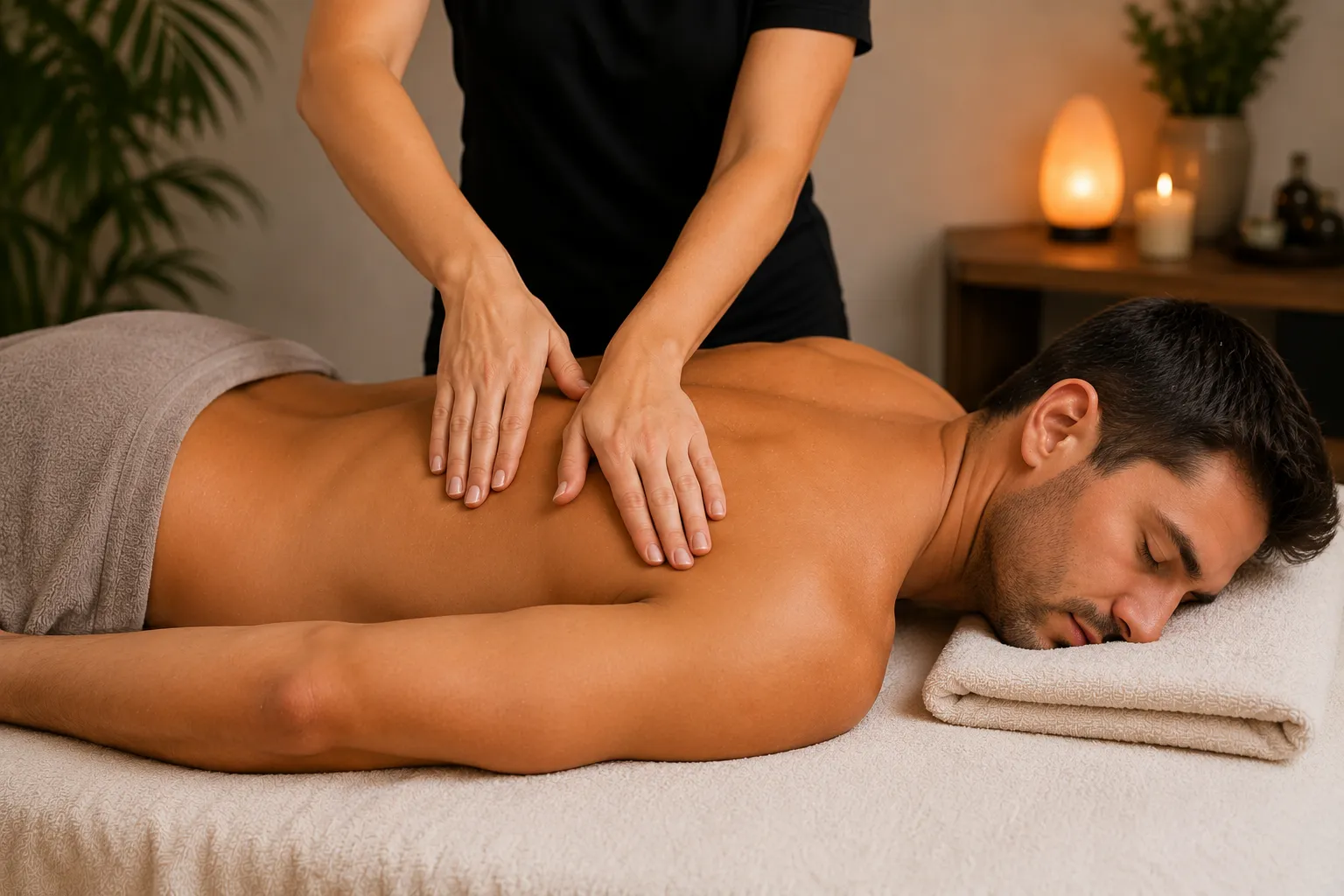
- Applying precise, sustained pressure to the trigger point until it softens
- Working the surrounding muscle and fascia to reduce the load on it
- Improving local circulation to a congested, overworked area
- Interrupting the referral pattern so pain elsewhere settles
- Restoring range of motion that the knot was restricting
Why that "good hurt" works
Releasing a trigger point often produces a distinctive "good hurt" — the muscle is tender under pressure, then eases as it lets go. That is normal and expected, and Laura keeps the pressure at a level you can breathe through. Sharp, bracing or unbearable pain is not the goal and is never necessary; the aim is to meet the tension and coax it to release, not to force it.
What a treatment looks like
Your session begins with a short conversation about where you feel the knots, whether they refer pain elsewhere, and what seems to bring them on. Laura then locates the trigger points by feel, works them with sustained pressure and surrounding-tissue release, and checks the referral pattern eases. Because knots often form in response to how you move and hold yourself, she will usually leave you with a suggestion or two to reduce the load on that area.
Keeping knots from returning
Stubborn, recurring knots in the same spot usually point to an ongoing load — a posture, a repetitive task or a stress habit. Treating the knot gives relief; addressing what keeps recreating it gives lasting change. Regular maintenance massage, paired with small changes to posture, movement and hydration, keeps most people well ahead of it.
Health fund rebates
Treated as a remedial massage, most clients with private health extras that include remedial massage can claim a rebate, since Laura is ATMS-registered. Mention it when booking.
Book your trigger point treatment in Runaway Bay
If a stubborn knot is nagging at you, focused remedial and trigger-point work is the right tool. Book online 24/7 via Fresha, or call 0493 428 064. Our Runaway Bay studio serves the wider Gold Coast.