
What sports massage actually is — honestly
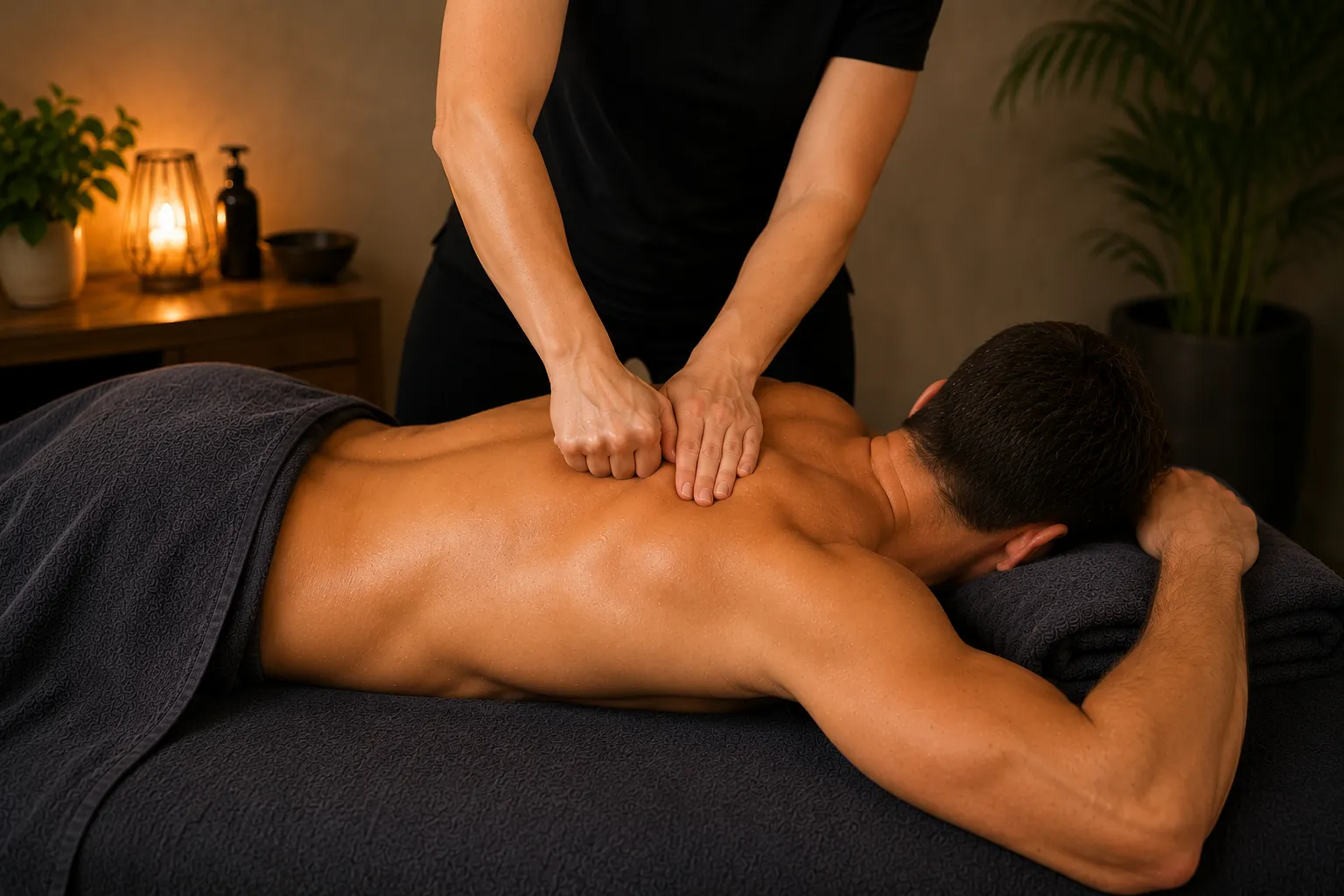
Let's be upfront about what sports massage at Massage by Laura is. It's sports-focused remedial work — the same firm-pressure techniques, trigger point therapy, and stretching that we use in deep tissue and remedial sessions, applied for the specific context of athletic recovery. The "sports massage" label describes the audience and goal, not a fundamentally different set of techniques.
What that means in practice: you book this session if you train consistently, work a physical job, or carry the accumulated body load that comes with being active. Laura works with the understanding that your body is being asked to do something repeatedly — and the work addresses the tightness, fatigue and chronic patterns that develop as a result.
Every session is delivered by Laura — an ATMS-registered remedial massage therapist with a Diploma of Remedial Massage from Evolve College Brisbane, and 5 years of clinical experience.
Who actually books sports massage
Most people who book sports massage at the Runaway Bay studio are not elite athletes. They are:
- Gym-goers — strength training 3-5 times a week, accumulating tightness through shoulders, back, hips and legs
- Runners — Broadwater regulars, parkrun crowd, half-marathon trainers — typically dealing with calf, hamstring, hip flexor and glute tightness
- Cyclists — road and MTB — chronic tightness through quads, hip flexors, lower back, and the upper trap / neck tension that comes with the riding position
- Weekend sports players — touch footy, social netball, golf, surfing, tennis — accumulated tightness from one big session a week, often paired with deconditioned recovery
- Tradies and physical workers — your body works hard every day, and the tightness that builds up is the same as what athletes experience
- CrossFitters and functional fitness clients — high-intensity training and movement variety means tightness shows up everywhere
- Older active adults — staying active in your 50s, 60s, 70s — sports massage helps maintain mobility and ease the wear and tear that comes with consistent movement
What you all have in common: you put your body under regular physical load, and recovery work helps you keep doing what you love without chronic stiffness becoming the price of admission.
What sports massage actually does
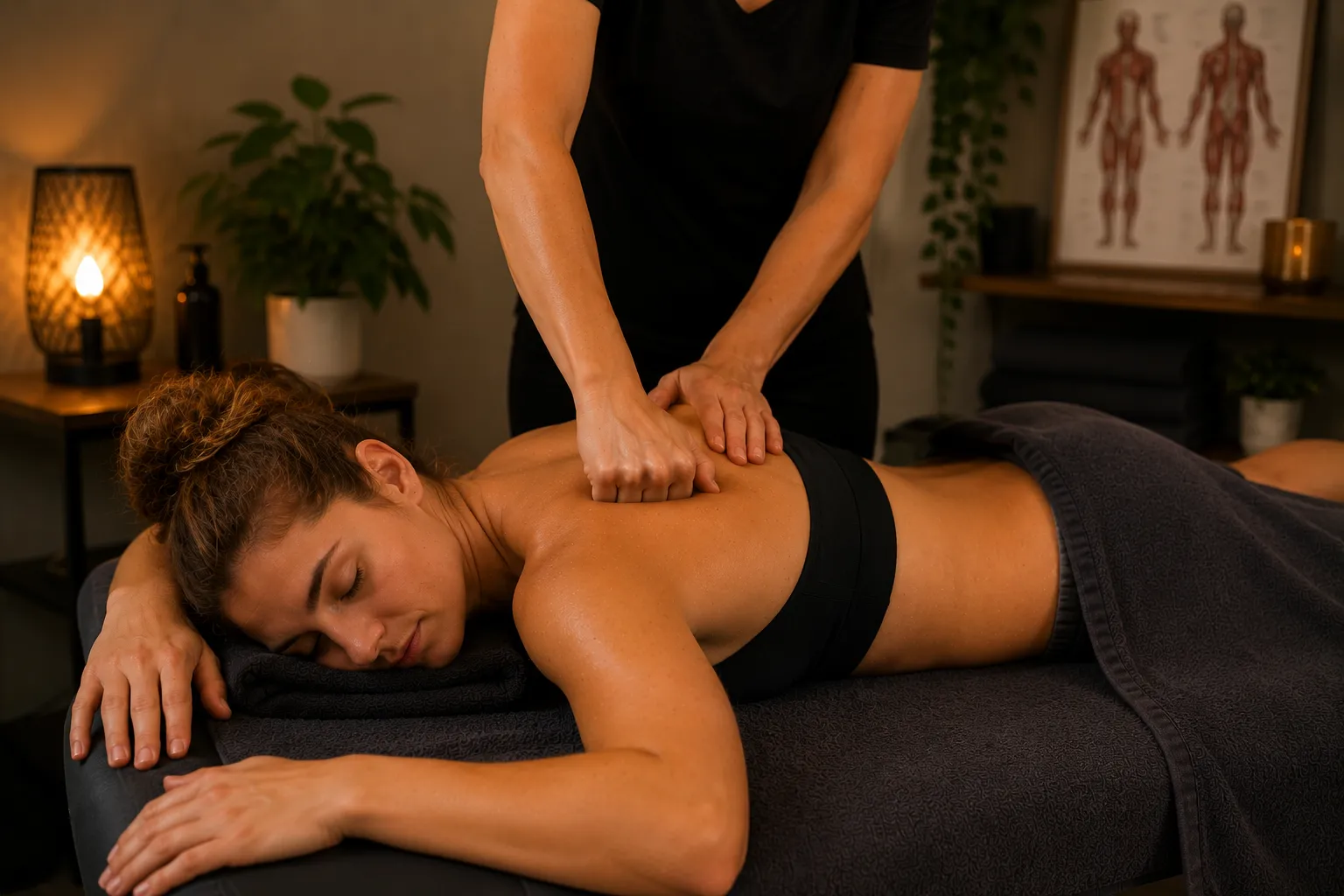
We try to be honest about what the evidence supports — and what it doesn't. Here is the realistic picture:
Well-supported benefits:
- Reduced post-exercise soreness (DOMS) — massage in the 24-48 hours after a hard session genuinely helps reduce next-day stiffness
- Improved circulation to worked muscles — supports the body's natural recovery processes
- Reduced accumulated tightness through chronically loaded muscles (calves, hamstrings, hip flexors, glutes, lower back, upper traps)
- Maintained range of motion — particularly important across long training cycles where tightness can quietly accumulate
- Subjective recovery — most clients report feeling looser, more mobile, and ready to train again sooner
- Sleep support — many clients report sleeping better on the night of a session, which is itself one of the most important recovery factors
Where the evidence is weaker:
- Direct performance improvement from a single session — the indirect contribution to performance via better recovery is supported; "this massage will make you faster tomorrow" is not
- Injury prevention from massage alone — massage is part of a broader recovery strategy, not a standalone preventer of injuries
- Removal of lactic acid — this is an old myth; lactic acid clears via normal metabolism within an hour or two of exercise, not via massage
We would rather give you the honest version than overpromise. The real value of regular sports-focused recovery work is the cumulative benefit across a training cycle — not dramatic single-session transformation.
When to book in your training cycle
Routine recovery
The most common booking. Schedule 24-48 hours after a hard training session, or on a rest day. The work helps the body integrate the training stress and reduces accumulated tightness before the next block of work.
In-season maintenance
Every 2-4 weeks during regular training. The goal is keeping chronic tightness from becoming a problem, maintaining range of motion, and addressing minor niggles before they become major injuries. Most regular clients find a recurring fortnightly or monthly slot keeps them training well.
During high-volume training blocks
More frequent — weekly or every 10 days — when training volume is high. Marathon training, race build-ups, end-of-season fitness blocks. Your body is doing more, so it needs more recovery.
Post-event recovery
A day or two after a hard race or competition. Helps reduce the accumulated fatigue and tightness from the event, supports return to normal training, and addresses any areas that took particular load.
What we do NOT do: pre-event and event-day sports massage
Important honest scope: pre-event and event-day sports massage is a different specialty. It typically involves light-pressure work done minutes before competition to warm up muscles and prime the nervous system — not the deeper recovery work we offer. If you need pre-event work, please book with a dedicated sports massage therapist with that specific training. We focus on what we do well: post-training recovery and in-season maintenance.
Also: do not book a deep sports massage within 48 hours of an important event. The body needs time to integrate the work before peak performance. Save deep recovery sessions for rest days.
Techniques used in sports massage
A typical sports session draws on whichever techniques fit your presentation and training context. Common elements:
- Firm, deep-pressure work — sustained firm pressure into the muscle groups under load. Quads and hamstrings for runners and cyclists, shoulders and lats for swimmers and lifters, hip flexors and glutes for almost everyone
- Trigger point therapy — sustained pressure on specific tight points, often where pain refers from. Common targets: piriformis, QL (quadratus lumborum), gastrocnemius, infraspinatus, rhomboids
- Myofascial release — slower work into the fascial layer to release restrictions that aren't just muscular — particularly relevant for clients with chronic tightness that doesn't respond to standard work
- Stretching and mobility work — passive stretching and PNF (proprioceptive neuromuscular facilitation) integrated through the session to improve range of motion alongside the soft tissue work
- Compression and broadening strokes — across overworked muscle bellies to support circulation and reduce post-exercise stiffness
Where useful, sessions can also incorporate myofascial cupping for stubborn fascial restriction — Laura holds a separate post-graduate certification specifically in cupping.
Sports massage vs other treatments
Sports massage vs remedial massage
Remedial starts with diagnostic assessment — what is the underlying cause of the issue, how should we address it? Sports massage assumes the cause (training load) and focuses on recovery work. If you have a specific injury or pain to assess, book remedial. If you train hard and want recovery, book sports. Remedial is always claimable on health fund; sports massage may or may not be (depending on your fund and how the invoice is formatted) — see the FAQ below.
Sports massage vs cupping
Cupping is a complementary technique often used alongside sports massage for stubborn fascial restriction — common with cyclists' tight quads and IT bands, runners' calves, lifters' lats. Some clients book a dedicated cupping session for specific stubborn areas; others have it incorporated as part of a sports session.
This treatment can help with
Sports massage is most useful for clients dealing with these patterns:
What to expect during your appointment
Your session begins with a quick intake — what training you do, your current load, areas of particular tightness or niggles, any upcoming events or competitions, and what you would like the session to focus on. If you have specific recovery goals (preparing for a race in a few weeks, recovering from one, dealing with a chronic issue that has been niggling), this is the moment to flag it.
The session itself is direct work. Most clients undress to underwear and lie face-down on the table, draped with towels — only the area being worked on is uncovered at any time. Laura works through the target areas methodically, using whichever combination of techniques is appropriate. Pressure is checked in throughout — you should speak up if anything is too much.
After the session, mild soreness for 24-48 hours is normal, especially if you have not had bodywork in a while. Drink plenty of water, do some gentle movement, and avoid heavy training within the first 24 hours. By day 2 or 3, the worked areas usually feel noticeably looser and more mobile than before the session.
Frequently asked questions
What's the difference between sports massage and remedial?
Is Laura specifically trained in sports massage?
Will sports massage hurt?
When should I book a sports massage in my training cycle?
Will sports massage help me perform better?
Will sports massage prevent injuries?
I'm not a competitive athlete — is sports massage still right for me?
How often should I have sports massage?
Will I be sore the next day?
Is sports massage claimable on private health funds?
How much does sports massage cost?
Can I book online?
Service areas
Massage by Laura is conveniently located in Runaway Bay and serves clients across the Gold Coast, including:
Book your sports massage today
Ready to feel better? Booking is simple — online 24/7 via Fresha, or by phone on 0493 428 064. If you're not sure whether this is the right treatment for you, send Laura a message first — she'll happily talk it through.