
What pregnancy massage is — and isn't
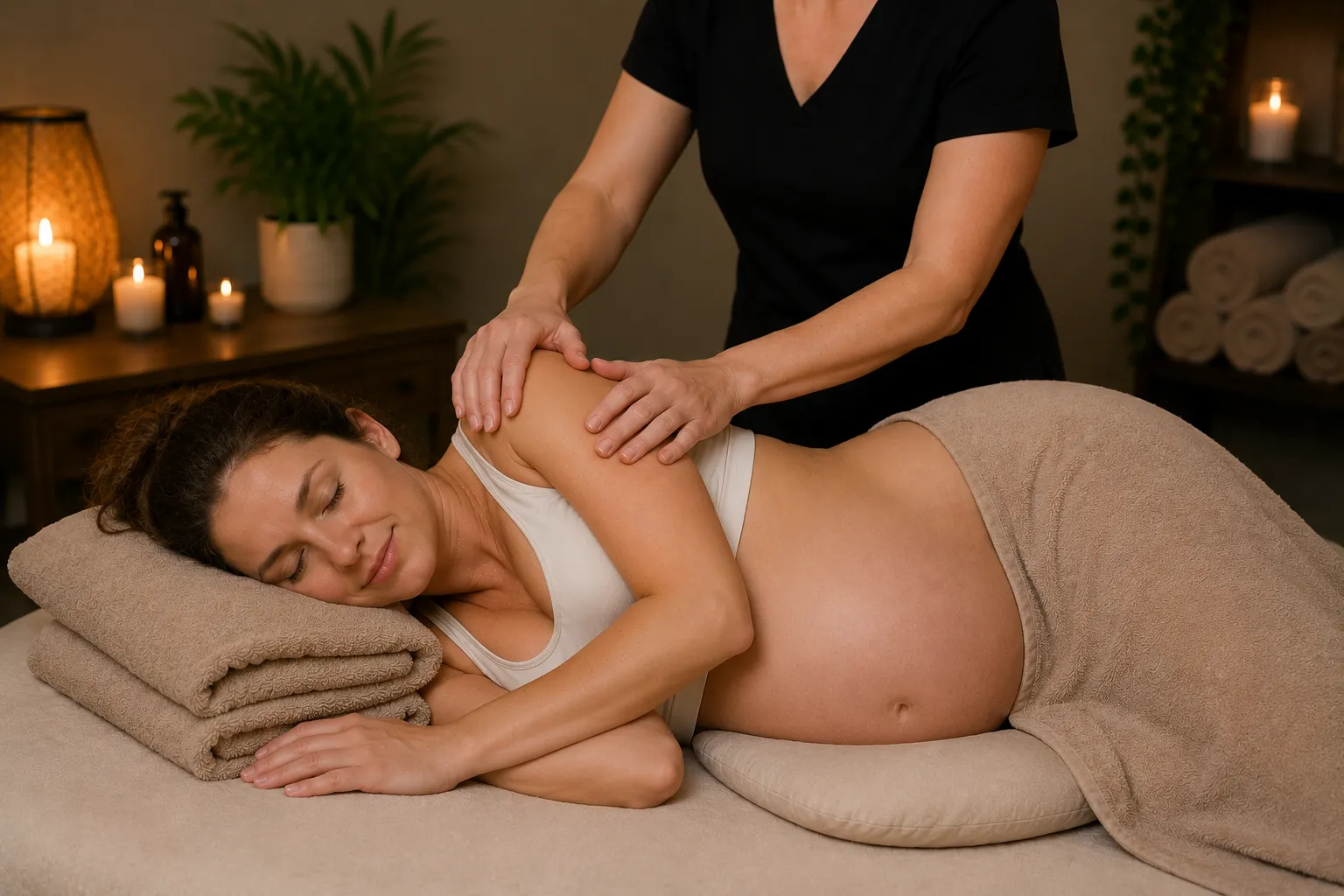
Remedial pregnancy massage is a safety-modified form of remedial massage, designed specifically for pregnant clients in the second and third trimesters. The positioning is different (side-lying, well-cushioned — not face-down or face-up), the pressure is more moderate, and certain techniques and areas are avoided. The goal is the same as standard remedial: address muscular tension and discomfort, improve mobility, and help your body cope better with what it is being asked to do.
What pregnancy massage is not: a treatment for pregnancy itself, a labour-inducer, a way to "fix" pregnancy complications, or a substitute for medical care from your obstetrician, midwife or GP. It is a therapeutic comfort treatment that addresses real muscular issues pregnancy creates — not a clinical pregnancy intervention.
At Massage by Laura's Runaway Bay studio, pregnancy massage is delivered by Laura — an ATMS-registered remedial massage therapist with a Diploma of Remedial Massage from Evolve College Brisbane, and 5 years of clinical experience. The pregnancy massage module is part of her standard remedial qualification (a required component of the Australian Diploma curriculum).
When to start, when to wait
First trimester (0-12 weeks): generally not the time to start
Most practitioners — Laura included — prefer not to begin pregnancy massage during the first trimester. This is precautionary rather than evidence-based: the natural rate of miscarriage is highest in the first 12 weeks, and starting massage after this point removes any concern about coincidental timing. If you genuinely need massage before 12 weeks (existing chronic back pain, for example), please discuss with your obstetrician or midwife first and bring their written approval to your appointment.
Second trimester (13-27 weeks): the comfortable middle
Second trimester is often the best time for regular pregnancy massage. Morning sickness has usually eased, energy is often higher, and the body is starting to feel the strain of changing weight distribution and softening ligaments. Many clients book every 2-4 weeks through this period as a maintenance routine.
Third trimester (28+ weeks): when most clients book most often
Third trimester is when massage tends to feel most valuable. Lower back pain, hip discomfort, leg heaviness, sleep disruption — most clients hit peak discomfort in the final weeks and want regular support. Many move to fortnightly or even weekly sessions through the last 4-6 weeks. Right up to your due date is fine, as long as no complications have developed.
How pregnancy positioning actually works
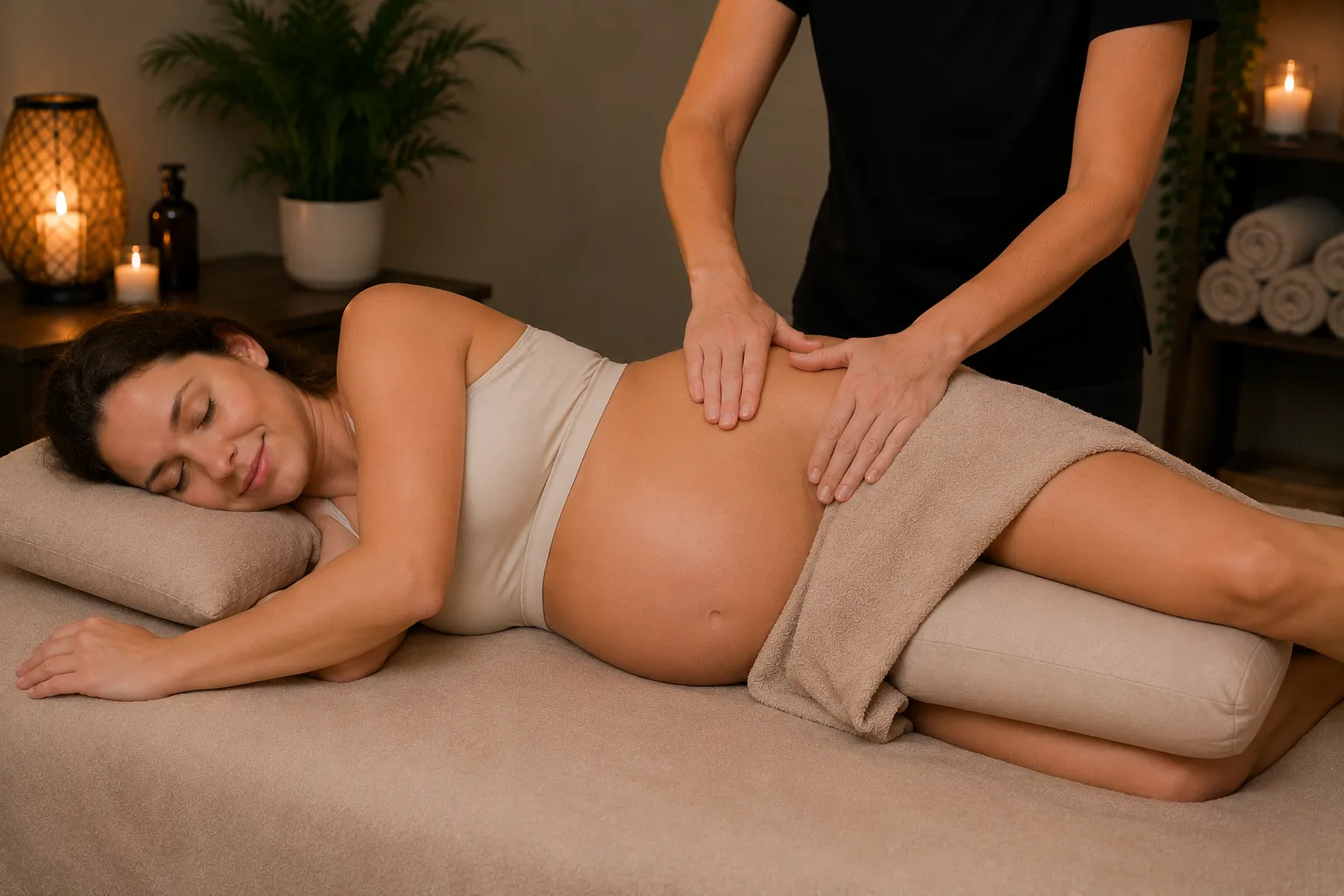
A lot of practical detail gets lost in the marketing language around "comfortable supportive cushions". Here is what the positioning actually looks like in practice:
You lie on your side on a standard massage table — not face-down on the table, not face-up flat on your back. From around 20 weeks onwards, lying flat on the back can compress the inferior vena cava (a major blood vessel), so we work entirely side-lying from the second trimester onwards. Supportive cushions are placed:
- Between your knees — keeps your hips and pelvis properly aligned
- Under your bump — supports the weight so your lower back is not pulled forward
- Under your head/neck — keeps the cervical spine in neutral alignment
- Behind your back if needed — gives you something to lean into if you find the position floppy
Most clients find this position genuinely comfortable. Sometimes more comfortable than how they have been sleeping at home. The therapist works the upper-side of your body first, then you turn over to do the other side after a break. You are draped with towels throughout — only the area being worked on is uncovered at any time.
What pregnancy massage commonly helps with
General pregnancy discomfort
The catch-all that covers fatigue, muscular aches, emotional overwhelm, and the cumulative weight of growing a person. Massage cannot fix any of this — but it can provide an hour of focused care where someone else is looking after you for a change.
Lower back pain
Probably the single most common pregnancy concern, particularly in the third trimester. As the baby grows, your centre of gravity shifts forward, your lumbar curve increases, and the muscles of your lower back work overtime to keep you upright. Targeted remedial work on the quadratus lumborum, erector spinae and glutes addresses this directly.
Hip and pelvic tightness
Relaxin, a pregnancy hormone, softens ligaments throughout the pelvis to prepare for birth. This is necessary and helpful, but it can also create instability and tightness in surrounding muscles (glutes, piriformis, hip flexors, adductors) as they work harder to maintain pelvic stability. Massage cannot change the hormone, but it can ease the muscular consequences.
Neck, shoulders and upper back
Postural changes, sleep disruption, and the awkward angles of breastfeeding preparation all contribute to upper-body tension. Plus the simple fact that the muscles that hold your head and shoulders are working with a different overall body shape.
Leg heaviness and mild swelling
Mild swelling of the feet and lower legs is common in late pregnancy. Light, upward-direction work on the lower legs (drawing on lymphatic drainage principles, which Laura is separately certified in) can ease the heavy, tired feeling. Note: significant or sudden swelling needs to be assessed by your obstetrician or midwife immediately — it can be a sign of pre-eclampsia.
Sleep difficulties
Sleep gets progressively harder as pregnancy advances. Many clients report sleeping noticeably better on the night of a massage — the parasympathetic shift from the session tends to carry through.
Stress and emotional fatigue
Pregnancy is wonderful and also exhausting. Massage gives you permission to do nothing for an hour, with someone else taking care of you. That alone has real value.

What we will NOT do during a pregnancy massage
Honesty about scope matters in pregnancy more than anywhere else. Here is what is deliberately left out of a pregnancy session:
- No deep abdominal work — the belly is left alone other than supportive cushioning
- No face-down (prone) positioning — uncomfortable and unsafe past first trimester
- No flat-on-back (supine) positioning after the second trimester begins — risks vena cava compression
- No deep pressure on inner ankles or inner calves — there are traditional acupressure points in these areas associated with labour induction in some bodywork frameworks. Whether or not these effects are real, we avoid the area as a precaution.
- No aggressive pressure on the lower back in clients with sacroiliac instability
- No work over varicose veins — a common pregnancy issue, particularly in late pregnancy
- No essential oils traditionally cautioned in pregnancy — only unscented or pregnancy-safe oils
- Nothing your obstetrician or midwife has specifically told you to avoid
When to talk to your obstetrician or midwife first
Please consult your medical team before booking pregnancy massage if you have any of the following:
- A high-risk pregnancy or history of pregnancy complications
- History of pre-term labour or early miscarriage
- Placenta previa or any placental abnormality
- Pre-eclampsia, eclampsia, or significant blood pressure issues
- Gestational diabetes (depending on how it is being managed)
- Severe morning sickness (hyperemesis gravidarum)
- Blood clotting disorders or current anticoagulant medication
- Severe varicose veins or recent DVT
- Multiple pregnancy (twins, triplets) — your team may have specific guidance
- Any unexplained pain, bleeding or pregnancy symptom your team is monitoring
We would rather you ask them and bring their guidance with you than skip the conversation. If you are unsure whether your situation suits pregnancy massage, send Laura a message describing it briefly and we can discuss before you book.
Postnatal massage — for after the baby arrives
Once your baby has arrived, massage can become an even more valuable form of self-care. Two general guidelines:
After a vaginal birth: Gentle remedial massage can typically resume around 6 weeks postpartum, with your doctor or midwife clearance. Many clients find postnatal remedial particularly helpful for the neck and shoulder tension that builds up from feeding, carrying, and the awkward angles of caring for a newborn.
After a c-section: Manual lymphatic drainage (MLD) can be particularly useful for managing post-surgical swelling and supporting scar healing. Laura holds a separate post-graduate certification specifically in MLD. Timing depends on your surgeon's clearance — typically from around 4-6 weeks post-op, but follow their specific guidance.
Health fund rebates for pregnancy massage
Remedial pregnancy massage is claimable on most major Australian private health extras cover — it falls under the broader "remedial massage" eligibility, supported by Laura's ATMS registration. Coverage depends on your specific policy and annual limits, but typical rebates range from A$25-A$70 per session.
Funds that typically cover remedial massage include BUPA, Medibank, HCF, NIB, AHM, Australian Unity, Defence Health, HBF and most other major providers. Just mention your fund when booking and Laura will prepare an itemised invoice with the correct provider numbers — most funds let you claim directly via their app, often on the spot.
This treatment can help with
Remedial pregnancy massage is most useful for clients dealing with these patterns:
What to expect during your appointment
For your first pregnancy massage, please plan a few extra minutes — the intake conversation is longer than a follow-up. We will discuss: your stage of pregnancy, any complications or things your medical team has flagged, current discomfort areas, sleep, anything you would like to avoid, and what you would like from the session.
The session itself begins with you settling on your side, with the cushions positioned to support you comfortably. Laura works one side, you take a brief break to turn over, then she works the other side. The whole session — back, hips, shoulders, neck, and (in the 90-minute version) legs — is delivered at a moderate pressure adjusted to your comfort. The belly is not worked on. You can ask Laura to adjust anything at any time.
Afterwards, most clients leave feeling noticeably lighter through the back and hips, calmer overall, and ready for a much better night's sleep. Drink plenty of water, move gently for the rest of the day, and rest if you can.
Frequently asked questions
When in pregnancy can I start having massage?
Is pregnancy massage safe?
How is the positioning different from a regular massage?
Will there be any abdominal massage?
What does pregnancy massage actually help with?
Is remedial pregnancy massage claimable on private health funds?
Should I book 60 minutes or 90 minutes?
How often should I have pregnancy massage?
Are there any reasons I should NOT book pregnancy massage?
Is Laura specifically trained in pregnancy massage?
What about postnatal massage?
How much does pregnancy massage cost?
Can I book online?
Service areas
Massage by Laura is conveniently located in Runaway Bay and serves clients across the Gold Coast, including:
Book your remedial pregnancy massage today
Ready to feel better? Booking is simple — online 24/7 via Fresha, or by phone on 0493 428 064. Health fund rebates available on eligible remedial pregnancy massage treatments. If you're not sure whether this is the right treatment for you, send Laura a message first — she'll happily talk it through.