
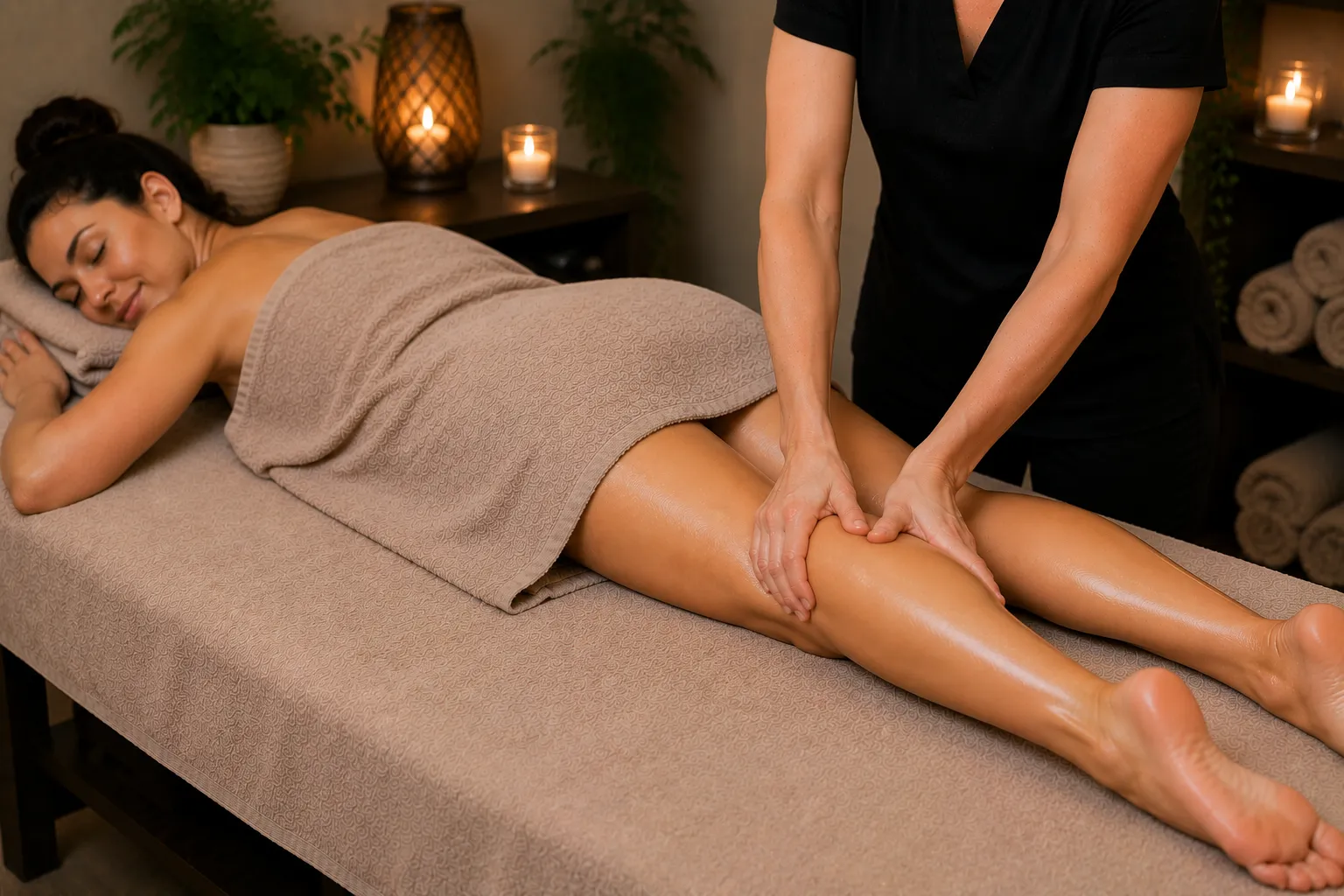
What is Manual Lymphatic Drainage?
Manual Lymphatic Drainage — MLD — is a specialised, very gentle massage technique developed in the 1930s to support the body's lymphatic system. The lymphatic system is the body's secondary circulation network, working quietly alongside the cardiovascular system to manage fluid balance and immune function. Unlike muscle, the lymphatic system doesn't have its own pump — it relies on movement, breathing, muscle contractions, and gentle rhythmic pressure to keep flowing.
MLD uses light, rhythmic, directional strokes — much softer than typical massage pressure — to support that natural flow. It looks and feels very different from any other massage on the menu. Many clients are surprised by how gentle it is, and equally surprised by how deeply relaxed they become during the session.
At Massage by Laura's Runaway Bay studio, MLD is delivered by Laura — an ATMS-registered remedial massage therapist with specific post-graduate certification in Manual Lymphatic Drainage, on top of her Diploma of Remedial Massage from Evolve College Brisbane. MLD is a proper clinical technique that requires dedicated training; it isn't covered fully in standard remedial qualifications. The result is treatments grounded in proper anatomical knowledge and clinical sequence — not just light pressure applied randomly.
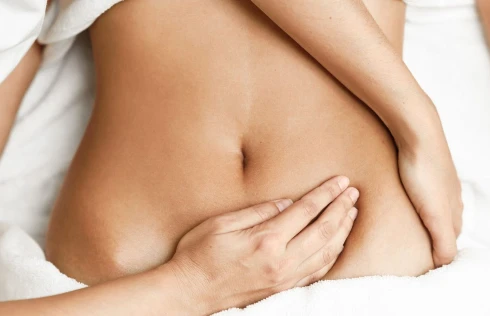
Post-surgical lymphatic drainage — recovery after cosmetic surgery
Post-cosmetic-surgery MLD is one of the most evidence-supported uses of lymphatic drainage massage, and it's one of the most-requested services at our Runaway Bay studio. The Gold Coast has a significant cosmetic surgery industry, and many surgeons specifically recommend MLD as part of post-op recovery.
MLD is widely used to support recovery after:
- Liposuction — reducing post-op swelling, supporting smoother results, easing discomfort during the initial healing phase
- Abdominoplasty (tummy tuck) — helping manage swelling and fluid accumulation in the treated area
- Brazilian butt lift (BBL) — supporting healing and recovery
- Breast surgery — augmentation, reduction, lift — supporting the lymphatic drainage of the chest and arm regions
- Facelifts — gentle MLD around the head and neck region to ease post-op puffiness
- Other body contouring procedures — wherever significant tissue work has been done
When to start MLD after surgery
Always follow your surgeon's guidance on timing. Different procedures have different healing timelines — some allow MLD to start within a few days post-op, others require longer. We will not work over fresh incisions, and we don't override surgical recovery protocols. Please bring your surgeon's post-op care instructions to your first session, or ask them specifically about MLD timing before booking.
For post-surgical clients, please send a quick message first so we can confirm appropriate timing for your specific procedure before you book a session.
Other conditions MLD may support
Alongside post-surgical recovery, manual lymphatic drainage is often used as a gentle, complementary support for people managing a range of conditions. It works with your body's own systems rather than treating any condition directly, and it sits alongside — never in place of — the care of your GP or specialist. Clients come to us for MLD to help support:
- Acute injury recovery
- Chronic pain management
- Neurological, respiratory, digestive and autoimmune conditions
- Post-viral syndromes
- Reducing pain and inflammation
If you're managing an ongoing health condition, please check with your treating doctor first, and let Laura know what you're working with so she can tailor the session appropriately.
Choosing your MLD session length
Manual Lymphatic Drainage is available as a 60, 90 or 120-minute session, plus a 30-minute add-on — the right choice depends on how much of the body needs covering. All sessions use the internationally recognised Vodder Method.
60-minute MLD — targeted sessions. The 60-minute session is a targeted, area-specific treatment rather than a full-body session. In 60 minutes there isn't time to work through the full sequence of lymph node clusters and drainage pathways across the whole body, so this session focuses on one or two specific areas — for example the legs, abdomen, a post-surgical site, or the face and neck. It suits you if you have a specific area that needs attention, you're short on time but still want proper MLD technique, or you're an existing client continuing focused work on one area between longer sessions.
90 and 120-minute MLD — fuller and full-body. If you need full-body lymphatic drainage — for example general post-surgical recovery, whole-body fluid retention, or your first MLD session — the 90 or 120-minute session is the right choice. Even at 90 minutes, whether the full body is covered depends on your individual needs; for some presentations or areas needing extra time, the full body may not be completed within 90 minutes. The 120-minute session gives the most reliable full-body coverage plus extra focused time. Laura can help you decide which duration suits your situation when you book.
30-minute Vodder MLD add-on. A 30-minute MLD add-on is available to complement your remedial or relaxation massage. This is an add-on only — it cannot be booked as a standalone treatment. It's ideal for focusing on one specific area, such as the face, abdomen or legs, and may assist with reducing fluid retention, bloating, pain and inflammation, and supporting recovery after injury or surgery (medical clearance required). If you'd like a standalone MLD session, choose the 60, 90 or 120-minute option instead.
Lymphatic drainage for fluid retention and wellbeing
Beyond the clinical applications, many clients book MLD for everyday reasons — and it can be genuinely helpful for those too. Common everyday reasons clients come in:
- Persistent fluid retention and puffiness — particularly in the legs, ankles or face
- Tired, heavy legs from long days standing, prolonged sitting, hot weather or pregnancy
- Post-travel swelling after long flights or extended sitting
- Bloating and a feeling of "heaviness" through the abdomen or limbs
- Sluggish circulation that doesn't seem to respond to other treatments
- As part of a wellness or self-care routine — particularly during hot weather or periods of low movement
Effects on everyday fluid retention are usually temporary and work best as part of a regular routine rather than a one-off treatment. If fluid retention is significant, persistent or one-sided, we'll always recommend seeing your GP first to rule out any underlying medical causes that need addressing.
What MLD feels like
If you're used to deeper, firmer massage, MLD can take a moment to adjust to — the pressure is genuinely light. Laura works slowly and rhythmically, often returning to specific areas in repeating cycles, moving fluid in the direction of the body's natural drainage pathways. The treatment usually begins around the major lymph node clusters — neck, axilla (armpit), inguinal (groin) — and works methodically through the body from there.
Most clients find MLD deeply relaxing despite the light pressure. Many drift in and out of sleep during the session. The session length (60, 90 or 120 minutes, depending on how much of the body you need covered) gives time for the slow, methodical sequence proper MLD requires.
What MLD does — and what it doesn't
We're careful with how we describe MLD's benefits because it's a clinical technique with both strong and weak evidence depending on what you're using it for.
MLD has strong evidence for:
- Reducing post-surgical swelling and supporting recovery
- Supporting chronic pain management and injury recovery
- Supporting healing after lymph node removal or damage
MLD may help, with more variable evidence, for:
- Everyday fluid retention and puffiness
- Post-travel swelling
- Tired, heavy legs
- General relaxation and wellbeing
MLD does NOT:
- "Detoxify" the body — that's not a real biological mechanism
- Cause weight loss (any fluid changes are temporary)
- Boost the immune system in a measurable way
- Treat or cure disease
- Replace medical care for any condition
We'd rather be honest with you up front than overpromise. Most clients appreciate this — particularly post-surgical clients, who already have a surgeon's instructions and want a therapist who works within them.
Lymphatic drainage vs other massage treatments
MLD vs remedial massage
Different goals entirely. Remedial massage assesses and treats muscular dysfunction, injury, postural patterns and pain. MLD works with the lymphatic system using a completely different, much lighter technique. Both are claimable on private health extras with Laura's ATMS registration, but you'd book each for different reasons. Many post-surgical clients move from MLD to remedial as their recovery progresses.
MLD vs remedial pregnancy massage
Both can help with fluid retention, but in different ways and contexts. Remedial pregnancy massage is specifically tailored for pregnant clients, addressing common pregnancy discomforts (back pain, hip pain, swelling, sleep). For pregnant clients with significant fluid retention, the pregnancy massage is usually the right starting point — please mention your pregnancy and trimester when booking.
Who MLD suits (and who it doesn't)
MLD is a good fit if you're recovering from a cosmetic surgical procedure (with your surgeon's clearance), you have chronic fluid retention, you're managing chronic pain, injury recovery or a post-viral condition, you want to support post-travel recovery, you're managing tired heavy legs as part of a wellness routine, or you've been specifically referred for MLD by a medical professional.
Please consult your GP before booking MLD if you have:
- Active cancer treatment — current chemotherapy or radiotherapy (check with your oncologist)
- An active infection, fever, or undiagnosed swelling/lump
- Acute deep vein thrombosis (DVT)
- Severe heart conditions or congestive heart failure
- Kidney failure or significant renal disease
- Active inflammation in the treatment area
- Recent surgery that hasn't been cleared by your surgeon for MLD
If you're unsure whether MLD is appropriate for your situation, send Laura a message first with a brief description of your circumstances. We'd rather refer you back to your GP or surgeon than book the wrong treatment.
This treatment can help with
MLD is most useful for clients dealing with these patterns:
What to expect during your appointment
Your session begins with a careful intake conversation — what's prompted you to book, any medical history relevant to the treatment, surgical procedures (with timing), medications, and what your goals are. For post-surgical clients, this is also when we'll review your surgeon's post-op instructions together.
The session itself is slow, rhythmic and methodical. Laura typically starts at the major lymph node clusters (neck, axilla, inguinal) before working systematically through the relevant body areas. The strokes are light, repeating, and directional. The studio is quiet and calm, designed to help your body settle into the parasympathetic state where lymphatic flow is most efficient.
After the session, you'll want to drink plenty of water, move gently, and avoid heavy meals or alcohol for a few hours. Many clients feel lighter and more relaxed immediately. Post-surgical clients often notice progressive improvement across a course of sessions rather than dramatic change after just one.
Frequently asked questions
What is Manual Lymphatic Drainage (MLD)?
How long is an MLD session, and which should I choose?
Is Laura qualified to provide MLD?
Can MLD help post-cosmetic-surgery recovery?
When can I start MLD after surgery?
Can MLD help with fluid retention and puffiness?
How does MLD feel different from regular massage?
Who should NOT have MLD?
Is MLD claimable on private health funds?
How often should I have MLD?
How much does MLD cost?
Can I book online?
Service areas
Massage by Laura is conveniently located in Runaway Bay and serves clients across the Gold Coast, including:
Book your lymphatic drainage massage today
Ready to feel better? Booking is simple — online 24/7 via Fresha, or by phone on 0493 428 064. Health fund rebates available on eligible lymphatic drainage massage treatments. If you're not sure whether this is the right treatment for you, send Laura a message first — she'll happily talk it through.