
Sports injury and recovery massage on the Gold Coast
Whether you run the Broadwater, lift at the gym, play weekend sport or train seriously, load is part of the deal — and so is the tightness, soreness and occasional niggle that comes with it. Sports and recovery massage helps you train more consistently by clearing accumulated tension, supporting recovery between sessions, and keeping small issues from becoming bigger ones.
At our Runaway Bay studio, sports massage and remedial massage are recovery and maintenance focused. Laura is an ATMS-registered remedial therapist — not a first-aider for acute trauma — so the work here is about helping active bodies recover, move well and stay in the game, rather than diagnosing or managing a fresh, serious injury.
What sports and recovery massage helps with
Active clients most often come in for:
- Tight calves, hamstrings, quads and hip flexors from running and lifting
- Stiff shoulders and upper back from pressing, swimming or rotational sport
- Post-training soreness and heavy, fatigued legs
- Recurring muscle knots and trigger points in overused areas
- General tightness that is starting to affect technique or range of motion
How massage supports recovery and performance
Training breaks the body down so it can rebuild stronger — recovery is where the adaptation happens. Regular massage supports that process by:
- Reducing post-training muscle soreness and tension
- Improving circulation to worked and fatigued muscles
- Restoring range of motion so movement patterns stay clean
- Releasing the tight areas that pull technique out of alignment
- Helping you train more consistently across a block
An honest note on the evidence: massage is excellent for recovery, tension release and how you feel and move. Claims that it flushes lactic acid or prevents all injury are overstated. What it reliably does is help you recover, stay loose and train well — and that consistency is what drives results.
Timing your massage around training
Sports massage is a recovery tool, not a pre-event one. Firm, deep work is best kept for recovery days rather than the 24 to 48 hours before a race or competition, because the body needs time to integrate it before peak performance. If you have a big event coming up, book with enough runway — or opt for a lighter, flushing session close to the day. Laura will help you plan the timing around your calendar.
What a recovery treatment looks like
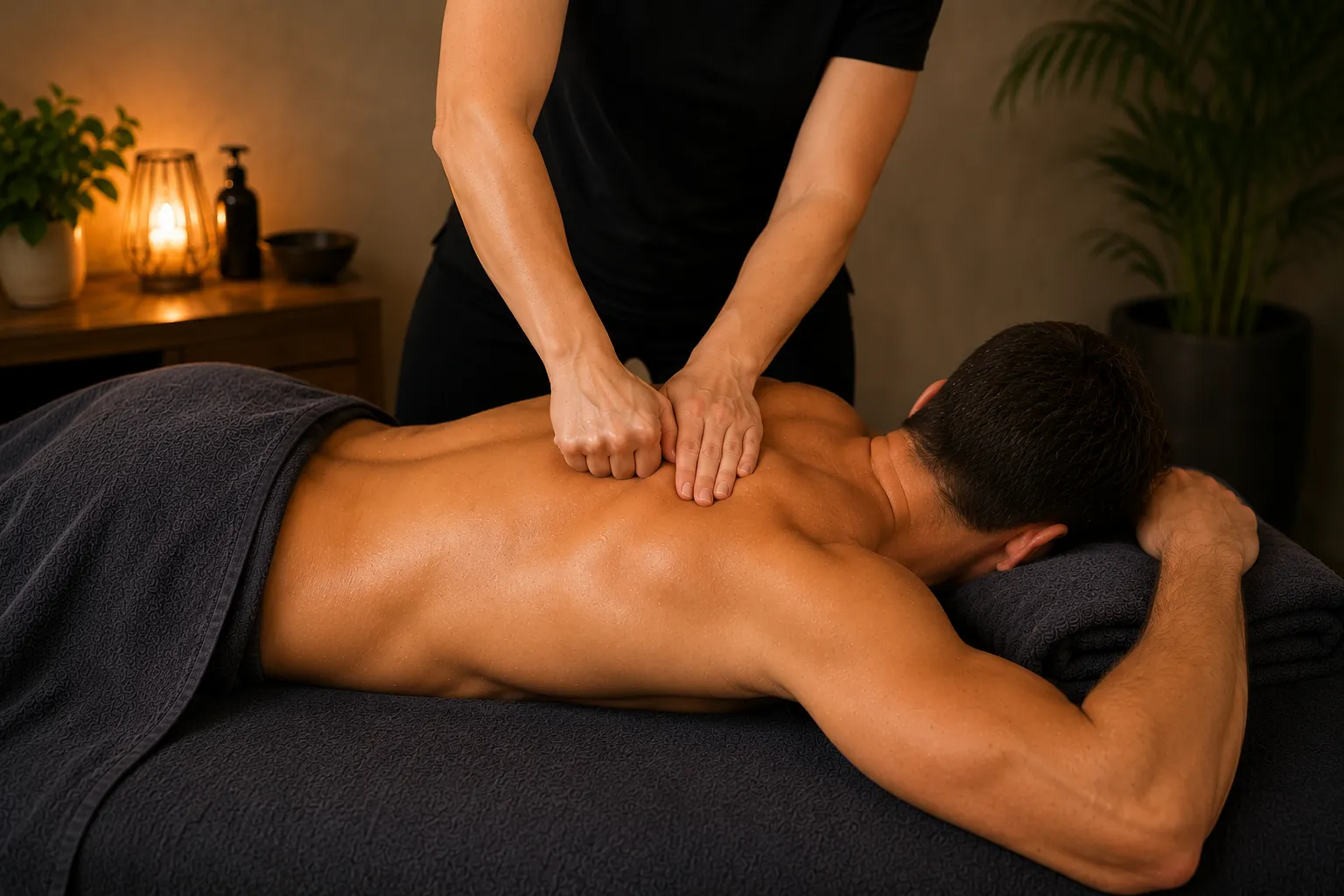
Your session starts with a chat about your sport, training load, any tight or niggling areas, and your goals for the session. Laura then works the relevant muscle groups with a mix of firm sports and remedial techniques — sustained pressure, trigger-point work and mobilising the tight tissue — checking in on pressure throughout. Many active clients book every two to four weeks through a training block, and more often during heavier phases.
When to see a professional first
Massage is for recovery, maintenance and muscular tightness — not for acute or serious injury. Please see your GP, physiotherapist or sports doctor first, rather than booking a massage, if you have a fresh acute injury (within the last 48 hours), a suspected tear, sprain or fracture, significant swelling, bruising or loss of function, or pain that is sharp, worsening or stopping you from bearing weight. Once you have been assessed and are in the recovery phase, massage can be a valuable part of getting back to training. If unsure, message Laura first.
Health fund rebates
Booked as a remedial treatment, most clients with private health extras that include remedial massage can claim a rebate, as Laura is ATMS-registered. Sports massage under the specific booking name may not be claimable in the same way, so if a rebate matters, ask when you book and Laura will guide you.
Book your recovery massage in Runaway Bay
Keep training consistently and recover well between sessions. Book online 24/7 via Fresha, or call 0493 428 064. Our Runaway Bay studio serves athletes and active people across the Gold Coast.