Massage for lower back pain on the Gold Coast
Lower back pain is the single most common reason people book in at our Runaway Bay studio — and it is one of the most common health complaints in Australia, affecting up to 4 in 5 people at some stage of their lives. Whether yours flared up overnight from an awkward lift, built slowly from years at a desk, or has quietly become part of your day, it wears you down. It changes how you sit, sleep, train and pick up your kids.
The good news is that the large majority of lower back pain is muscular and mechanical — tight, overloaded, guarded soft tissue rather than serious structural damage. That is exactly the kind of pain that a considered, assessment-based remedial massage can genuinely help with. We do not chase a quick fix that fades by tomorrow. We look at why your lower back is holding tension and work to release it at the source.
What is actually causing your lower back pain?
Most lower back pain is not coming from a single dramatic injury. It usually builds from a combination of everyday loads: prolonged sitting, repetitive bending, heavy lifting, long drives, stress, and muscles that have gradually shortened and tightened around the lumbar spine and pelvis. Over time those muscles start to guard, restrict your movement, and refer pain across the lower back, hips and glutes.
Common contributors we see in the studio include:
- Postural and desk-related load — hours of sitting shorten the hip flexors and switch off the glutes, leaving the lower back to do work it was never meant to do. If this sounds like you, our desk-job and posture pain page is worth a read too.
- Lifting and manual work — trades, nursing, warehousing and parenting all load the lumbar spine repeatedly.
- Training and sport — heavy compound lifts, running and rotational sports can leave the lower back tight and overloaded.
- Tight, knotted muscles — trigger points in the deeper layers of muscle refer pain in patterns that feel exactly like back pain. See muscle knots and trigger points.
- Nerve-related pain — when pain travels down the leg, tight glute and lower-back muscles can be part of the picture. See massage for sciatica.
How remedial massage helps lower back pain
Remedial massage works on the muscular and soft-tissue drivers of lower back pain rather than simply masking the ache. By releasing the muscles that have tightened and started to guard, easing pressure on the joints they cross, and improving how the area moves, the lower back has a chance to settle and recover.
In practical terms, a session helps to:
- Release chronic tension through the lower back, glutes and hips
- Break down the tight bands and trigger points that refer pain
- Ease the muscular guarding that keeps you stiff and cautious of movement
- Improve circulation to areas that have become congested and overworked
- Restore range of motion so bending, sitting and standing feel easier
- Calm an over-protective nervous system that is amplifying the pain
Where firmer, more focused pressure into stubborn areas is needed, Laura combines it with remedial techniques. Which approach suits you best is something we work out together at your first visit.
The muscles behind most lower back pain
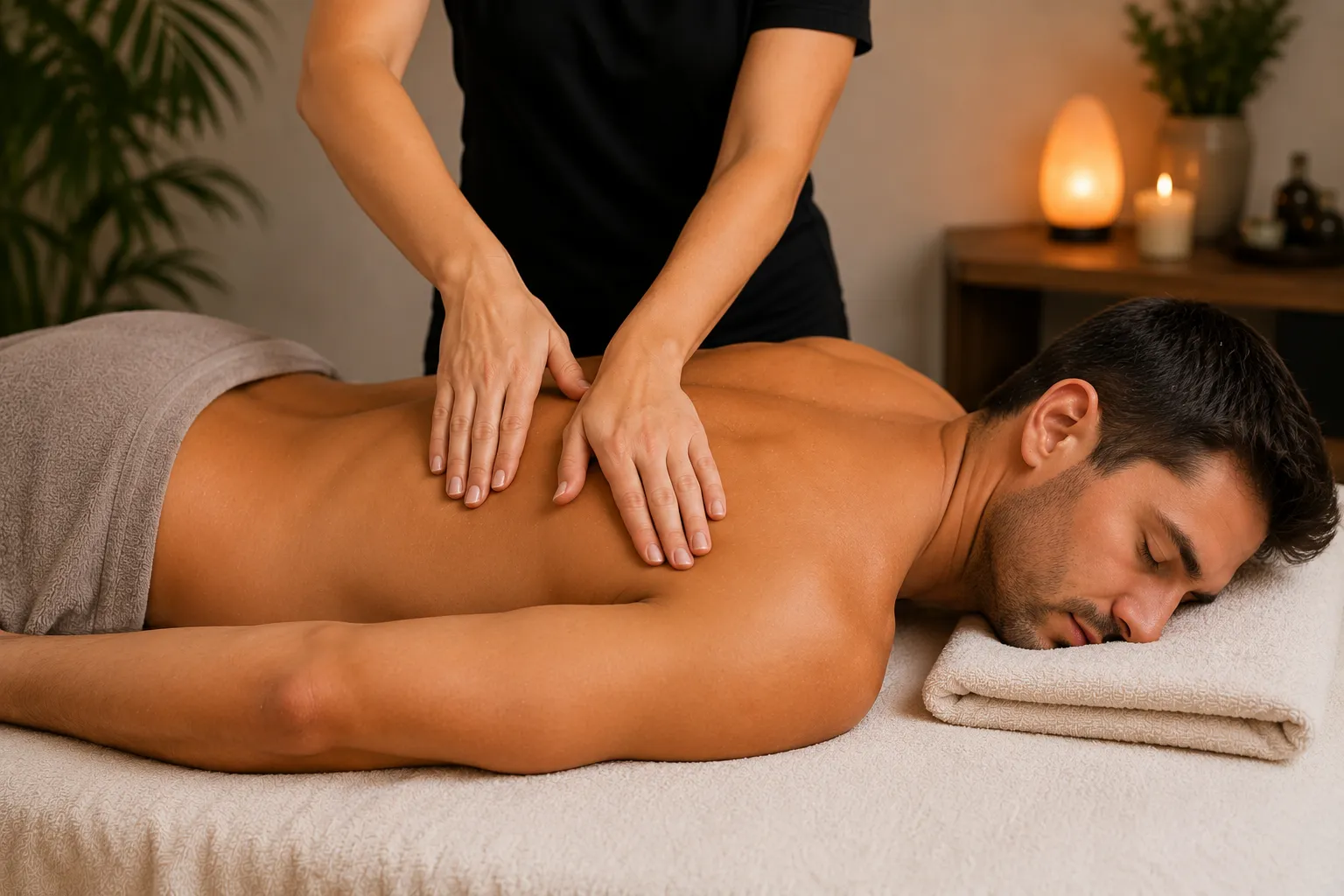
When we assess lower back pain, a handful of muscles come up again and again. The quadratus lumborum (the deep muscle running between your lowest rib and your pelvis) is a classic culprit for one-sided lower back ache. The erector spinae — the long muscles either side of the spine — tighten and fatigue from sitting and lifting. The glutes and piriformis often refer pain into the lower back and down the leg, and tight hip flexors from sitting pull on the lumbar spine from the front.
This is why treating lower back pain properly means looking beyond the spot that hurts. Very often the painful area is where you feel it, but the driver sits in the hips, glutes or the opposite side. A good assessment finds that pattern rather than just rubbing the sore spot.
Is it your back, or is it your hips?
A large share of what people call lower back pain is actually driven by the hips and pelvis. When you sit for long stretches, the hip flexors shorten and the glutes become weak and inactive. The lower back then compensates for movement the hips should be producing, and it tightens and aches as a result. Releasing the hips and glutes, and freeing up the surrounding tissue, frequently gives more lasting relief than working the sore area alone. It is one of the main reasons a whole-region treatment tends to outperform a quick back rub.
What a lower back pain treatment looks like at our Runaway Bay studio
Every session begins with a short conversation and assessment. Laura will ask how the pain started, what makes it better or worse, your work and activity levels, and any relevant medical history. From there she checks how your lower back, hips and pelvis are moving, and where the tension and restriction actually sit.
The treatment itself is tailored to what she finds. Expect a considered mix of remedial techniques — sustained pressure, trigger-point work, and mobilising the tight tissue through the lower back, glutes and hips. Laura checks in on pressure throughout; the work can feel firm and there may be a "good hurt" over tight areas, but it should never be sharp or unbearable. Most people finish a session moving more freely and feeling noticeably looser, and she will usually leave you with a couple of simple things to do between visits.
How many sessions will you need?
Most people feel a meaningful difference after a single session, especially for a recent flare-up. Longer-standing or recurring lower back pain usually responds best to a short course of treatments — often three to six sessions spaced a week or two apart — which gives the body time to unlearn old holding patterns and hold the improvement between visits. Once things have settled, many clients move to a monthly maintenance massage to keep the lower back from tightening back up. There is no lock-in and no pressure — Laura will give you an honest sense of what your situation is likely to need.
When massage is not the answer
We believe in being honest about scope. Remedial massage is excellent for the muscular and mechanical lower back pain that makes up the great majority of cases — but it is not the right first step for everything. Please see your GP or an appropriate health professional promptly, rather than booking a massage, if your lower back pain comes with any of the following:
- Numbness, tingling or weakness in both legs, or loss of bladder or bowel control
- Pain following a significant fall, accident or trauma
- Fever, unexplained weight loss, or pain that is constant and unrelenting at night
- A known or suspected fracture, or a serious underlying medical condition
If you are ever unsure, send Laura a message before booking and she will let you know honestly whether massage is appropriate or whether you would be better seeing your doctor first. Where massage is suitable, it can also work well alongside care from your GP, physiotherapist or chiropractor.
Looking after your lower back between sessions
Massage gives you a window of relief and improved movement — what you do between visits helps it last. Simple, sustainable habits tend to help most: getting up and moving regularly if you sit for work, gentle daily movement rather than long periods of rest, being mindful of how you lift, and keeping reasonably active overall. Laura will tailor a couple of specific suggestions to your body rather than handing you a generic sheet.
Health fund rebates for lower back pain treatment
Laura is an ATMS-registered remedial massage therapist, which means most clients with private health extras that include remedial massage can claim a rebate on their treatment. Just mention it when you book so your invoice is prepared correctly. If lower back pain is your main concern, booking remedial massage (rather than a relaxation treatment) is usually the right choice, both for the clinical approach and for health fund eligibility.
Book your lower back pain treatment in Runaway Bay
If lower back pain is holding you back, targeted remedial massage is a sensible, low-risk place to start. Booking is easy — online 24/7 via Fresha, or by phone on 0493 428 064. Our studio in Runaway Bay serves clients right across the Gold Coast. Not sure if it is the right fit? Send Laura a message first and she will talk it through honestly.